


LAS VEGAS (KTNV) — The Desert Research Institute (DRI) will partner with NASA to track and forecast how wildfire smoke moves across Nevada and beyond, thanks to a $1 million federal grant.
The funding comes as climate experts project worsening wildfire seasons in the years ahead.
WATCH| Geneva Zoltek reports the latest on DRI partnering up with NASA to track wildfire smoke in Nevada
"Our research on wildfires is helping Nevada and the West to better understand why fires are burning hotter and longer than previous decades, and what can be done to fight them," Desert Research Institute's President Dr. Kumud Acharya said at a press conference Monday.
JUNE 2025: Wildfire smoke continues to push into Southern Nevada
The new funding is intended to improve:
- early warning systems for smoke hazards
- communication about smoke risk and exposure mitigation to the public
- prescribed burn weather and smoke forecasts
- capacity for local smoke monitoring stations
A photo taken Aug. 7, 2021, shows just how severe the problem can get, when wildfires sent thick smoke over the Las Vegas Valley, obscuring the skyline and filling the air with particulate matter — tiny particles that can lodge in the lungs and cause long-term health impacts.
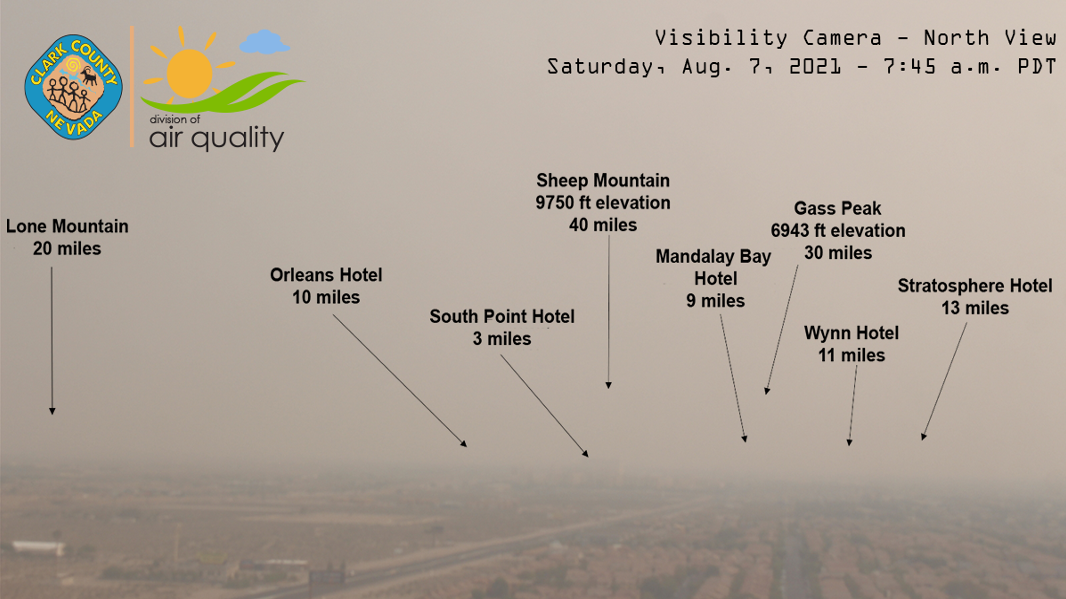
Clark County air monitoring stations across the valley already track particulate matter, but DRI researchers say more data and science are still needed to fully understand the threat.
"The key to dealing with any issue is good information," U.S. Rep. Dina Titus said of her role in advocating for the appropriation in Congress.
"The American Heart and Lung Association ranked Nevada's quality of air and we were 12th worst in the country. So this is definitely a pressing issue that we need to address," Titus said. "We're all entitled to breathe good air."
She acknowledged that there are ongoing challenges to securing scientific funding for climate change projects.
"There are still climate deniers in terms of how this is going to impact increased smoke, increased fire, increased heat, increased cost, and so in Congress you got to convince people that it is a danger and that it is worth funding," Titus said.

