


BOULDER CITY (KTNV) — Bureau of Land Management officials are asking the Interior Department to "set aside" a previous ruling that would have allowed them to proceed with a data center near Boulder City.
According to new court documents filed on Monday, attorneys for the BLM stated: "having reviewed the existing documents in this case, the BLM respectfully requests that its decision to approve the right-of-way amendment be set aside to allow the agency to conduct additional review of this application."
WATCH | How feds swapped a solar farm for a data center in Boulder City:
It also asked the Interior Board of Land Appeals to "vacate the decision under appeal and remand this case to the BLM for further action."
The filing states Townsite Solar 2 LLC, the developer looking to build the data center, did not oppose the motion. However, Boulder City plans to.
A spokesperson for Boulder City sent the following statement to Channel 13:
"Boulder City is not against allowing additional environmental review for the Townsite Solar 2 data center, the City is against remanding the decision to the BLM at this time, as there are still pending legal questions properly before the IBLA.
Nothing in the BLM’s motion to remand commits the BLM to conduct an environmental assessment, involve the public, or designate the City as a cooperating agency, and its approval would lift the stay that is currently in place.
The City’s full reasoning for opposing the motion will be set forth in its opposition due October 5, 2026.”
The project has been the subject of heated debate for months.
Townsite officials had originally planned to build a data center on a parcel of land near Interstate 11 and U.S. 95. However, the company withdrew its application due to public backlash and concerns from Boulder City officials.
WATCH | Boulder City planning commission rejects data center proposal after hours of opposition:
That's when company officials approached the BLM to change their right-of-way (ROW), which was granted in 2023 and authorized the company to build a solar power plant with a battery storage system on BLM-managed land. The company asked the BLM to amend the ROW to put a data center on that land instead of the power plant.
The Board of Land Appeals rejected that reasoning earlier this month.
"BLM did not study the effects of the data center project in a new or revised EA," court filings read in part. "BLM determined the data center is 'essentially like' the solar plant project and that it would have 'similar anticipated impacts.'"
According to the Interior Department, those projects are not "substantially the same."
WATCH | Feds pause Boulder City data center project:
This situation led to Rep. Dina Titus introducing the Public Lands Accountability Act last week.
“Data centers are proliferating in Nevada and other states having large expanses of federal land,” Titus said in a press release. “We need to make sure the public’s voice is heard and that the effects on the environment, water resources and the electric grid are thoroughly assessed and made public.”
The proposed legislation would prevent federal agencies from amending any existing right-of-way permits on BLM land to allow the construction of a data center without going through a new environmental permitting process. It would also require the BLM to consider the impacts of data center projects on regional water supplies.
You can read the draft of the bill below:
The Boulder City project is one of the first examples of private developers looking to build data centers on public lands. However, it might not be the last.
According to The Washington Sun, the Trump administration is considering proposals for at least 12 data centers and data center-related infrastructure projects to be built on federal public lands. Those proposals cover at least 17,600 acres across six states — Nevada, Arizona, Idaho, Oregon, Utah and Wyoming. At least three of the 12 proposals are in Nevada.
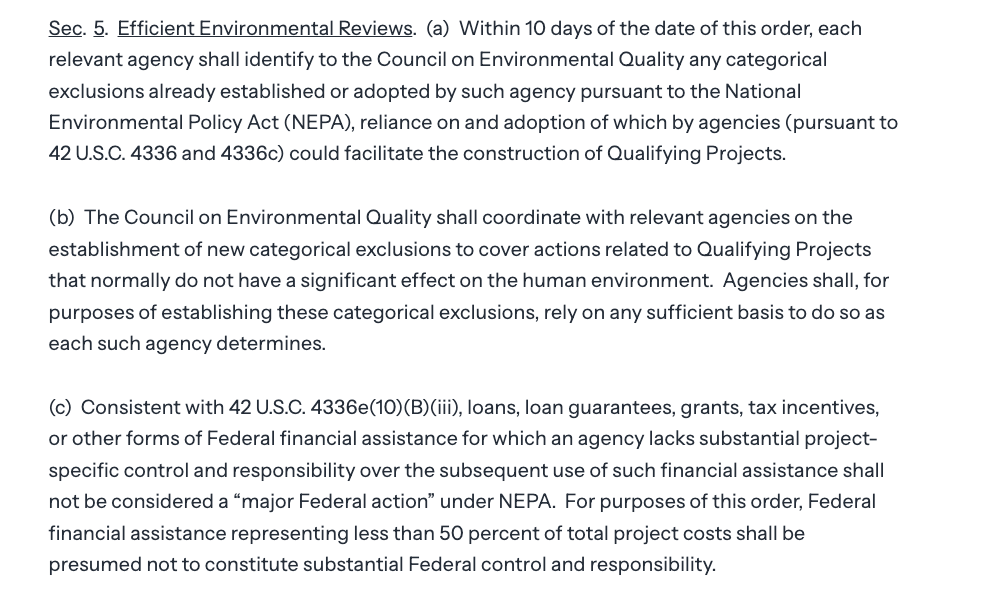
Back in July, President Donald Trump signed an executive order to speed up federal permits for data centers.
"It will be a priority of my Administration to facilitate the rapid and efficient building of this infrastructure by easing Federal regulatory burdens," the order reads in part. "In addition, my Administration will utilize federally owned land and resources for the expeditious and orderly development of data centers. This usage will be done in a manner consistent with the land's intended purpose — to be used in service of the prosperity and security of the American people."
When reading further, the executive order does address efficient environmental reviews.
It states the Council on Environmental Quality shall look at categorical exclusions already established or adopted by agencies under the National Environmental Policy Act, and they will coordinate with relevant agencies "on the establishment of new categorical exclusions to cover actions related to Qualifying Projects that normally do not have a significant effect on the human environment."
Last month, President Trump doubled down on his support for AI with a social media post that read: "The only reason that communities throughout the U.S.A. should not want Data Centers is if they want to end up being backwards and poor. If they want to be successful and rich, with far lower taxes and jobs all over the place, let Data Reign."
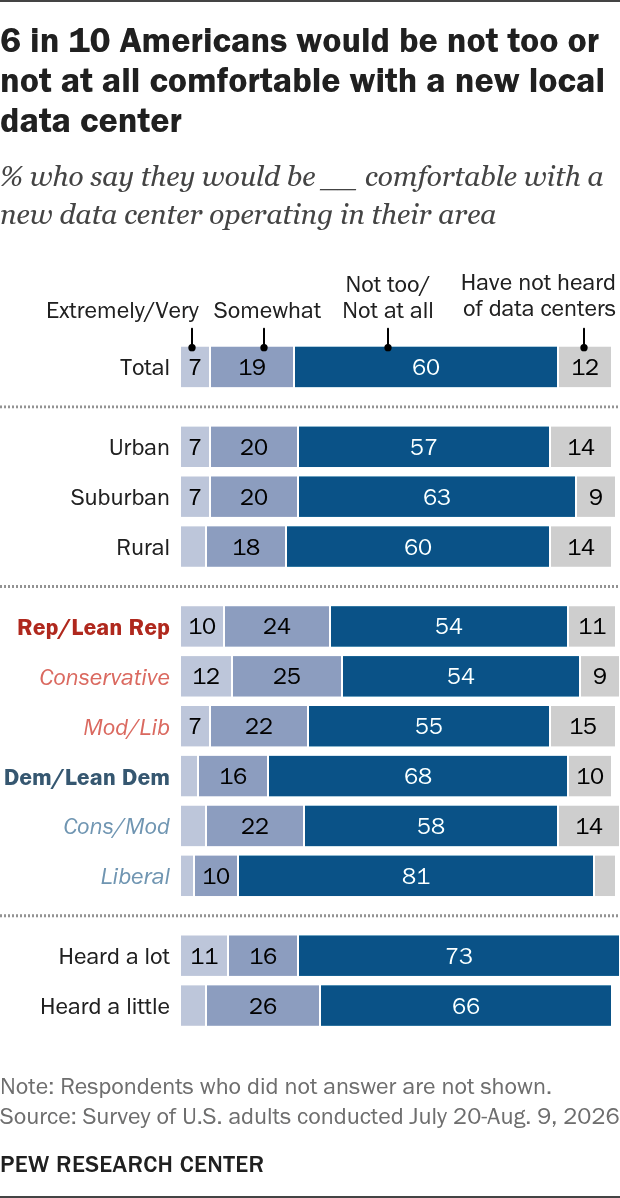
According to a Pew Research survey, published on Tuesday, more than half of Americans (54%) now say data centers are mostly bad for the environment, which is up from 39% in January. The new survey also found that 60% of Americans say they wouldn't be comfortable with a new data center operating in their area.
The topic has also been a political hot potato ahead of midterm elections, with politicians on both sides of the aisle speaking out about it.
For example, on Monday, California Gov. Gavin Newsom signed seven bills that protect consumers from higher electricity costs and tracking how much energy and water that data centers use. On Monday, in Texas, Gov. Greg Abbott directed the Texas Commission on Environmental Quality to stop all permits sought by data centers.
Here in Nevada, Gov. Joe Lombardo signed an executive order last week targeting data center developers.
The executive order targets tax break legislation that was passed in 2015. Under the executive order, data centers looking for those tax breaks have to agree to pay the Local School Support Tax in full and agree to a community support commitment.
While the specifics of the community support commitment are still being worked out, the governor's office states that at the very least, developers must "meet local water standards, cover the cost of serving the facility without passing those costs on to ratepayers, and ensure the project does not strain the electrical grid or community during emergencies."
WATCH | Lombardo executive order puts 'guardrails' on data centers:
The executive order also constitutes commitments of the state, including a Responsible Speed to Power Plan identifying the facilities required to serve the large load anticipated through 2036 while ensuring no costs are ever passed on to Nevada ratepayers.
State lawmakers are also looking at those tax breaks ahead of the next legislative session.
"These are billionaire investments and there is no actual need for them to continue to have a partial abatement of taxes for a data center that they can afford to pay for themselves," State Sen. Dina Neal said.
"Nevada, to me, is positioned right now to win the lottery and one of the largest drivers of economic growth in the world," said Assemblymember Lisa Cole. "I'd instead support a well-crafted piece of legislation directing local jurisdictions to negotiate development agreements and continuing the existing subsidies as long as we hold them to the highest standards on water conservation and grid buildout so these costs never land on ratepayers."