


LAS VEGAS (KTNV) — Paratransit provides a vital service for disabled locals throughout Southern Nevada, serving over 5,000 people every day.
However, when the RTC debuted a new app-based system in March, designed to make the system more user-friendly, it had the opposite effect — disrupting the lives of some of the most vulnerable people in our community and prompting them to ask "Darcy, What's the Deal?"
WATCH PART 1: Paratransit riders voice concerns with delays across the valley
Six years ago, Jose Ramirez went to the hospital for severe back pain, which led to life-changing surgery.
"The doctor told me, 'We need to do the surgery like right now, right away.' At that point, I didn't have no choice, but he only gave me two options," Ramirez said. "Either way we do the surgery, the surgery comes with risk. Fifty percent, you could probably die from surgery. The other 50% was if I make it from the surgery, probably half of my body won't work, which is the case. I made it through the surgery but half of my body doesn't work anymore."
That surgery left Ramirez a paraplegic, but he refuses to let that slow him down.
"I made the decision that I wanted to start working," Ramirez said. "I wanted to become independent again."
He landed a job at the Sephora distribution center and depends on paratransit to get there and back. However, Ramirez and many other riders told us that vital service is unreliable. They say it's gotten far worse since March, when the RTC launched a new operating system that was supposed to make things better.

The $7 million, taxpayer-funded contract is with a company called RideCo, which already services five of the 10 largest cities in the United States.
RTC Deputy CEO Theresa Gassier told us that on paper, the promised upgrades sounded great.
"There are increased operational performance factors in the new system that we're excited about. We really do think that this is the right direction for our paratransit system to be going in," Gassier said. "It has capabilities such as being able to negotiate rides better. It uses newer mapping technology. It can do better assignment of where to pick up and drop off customers more rapidly and adjust if there's unforeseen things on the routes such as a construction work zone. It knows how to route around those now instead of causing an additional delay waiting in a queue through a construction zone."
However, riders tell us the rhetoric doesn't match the reality.
"This changeover was kind of like the straw that broke the camel's back," Bill Halford said.
After getting nowhere with the RTC, he reached out to 13 Investigates.
"I was hoping that we could get somebody to listen, somebody that actually cares," he said.
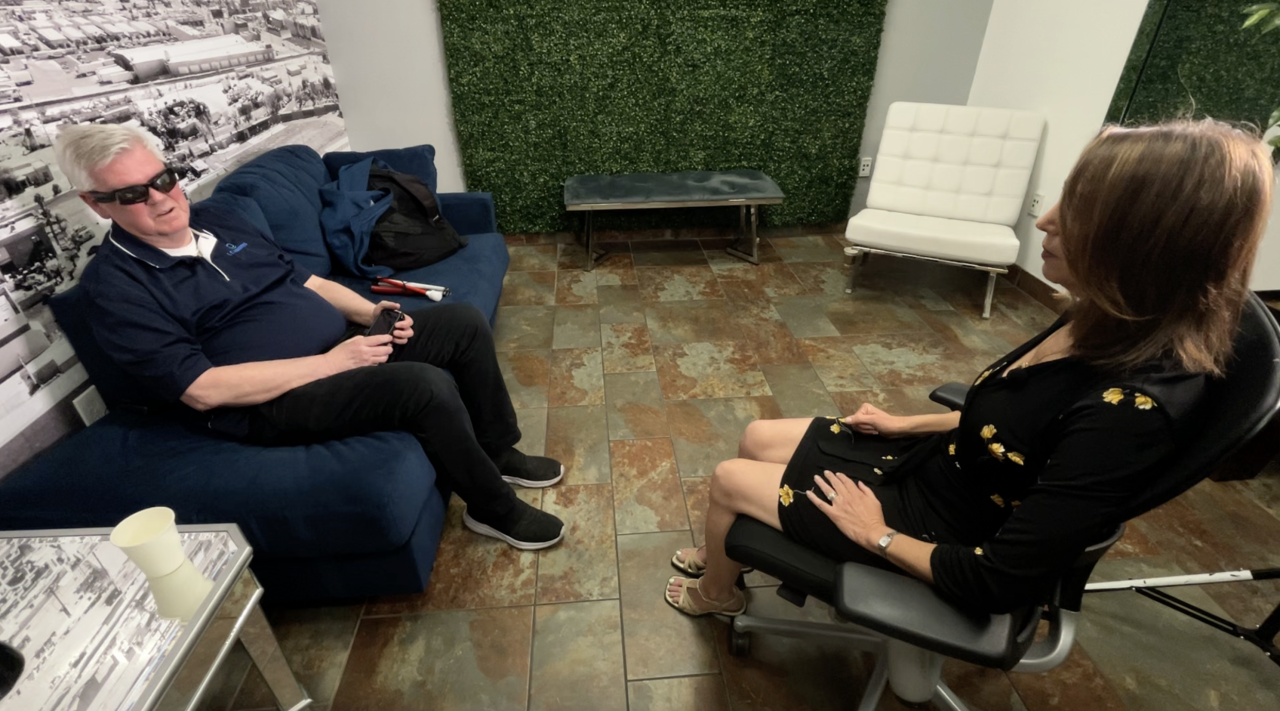
Halford works at Nellis Air Force Base. He and a co-worker, both of whom are blind, rely on paratransit for door-to-door service. He says the new software has been a nightmare.
"It just doesn't seem like there was enough planning ahead of time," Halford said. "The drivers didn't have a lot of training on it and it just wasn't implemented properly. It showed wrong addresses for pick-ups and drop-offs."
"And you're not in a position to go chasing after a bus," I said.
"No. I can't even use rideshare because they can't get on the base, like Uber or Lyft," Halford said. "They would have to have a pass to get on the base and very rarely do they. The only other thing I was going to do one day was actually talk to the Nellis police and have them give me a ride up to the visitor center, which is outside of the gate, so that I could call a rideshare to get home."
Halford tells me that he's been left stranded by paratransit more than once.
"I've had two occasions on Nellis Air Force Base where we got off work and the app sent me a message saying we do not have a ride for you to get home," he said.
"What do you do then?" I asked.
"Well, one day, one of our coworkers gave us a ride, but it's not their responsibility to do that," Halford explained. "The other time, we had to get the general manager to call a road supervisor to come pick us up, and that was the problem with the new system. It doesn't allow that. With the old one, the dispatchers could actually call a road supervisor and say 'come and pick up these people.' Even though it would be late, we'd still be getting home. I mean, I work eight hours a day, but it's a 12-hour day by the time I get picked up and taken home. Sometimes longer."
Ramirez has been stranded, too. With a bus never showing, he was forced to dig deep into his own pocket.
"I had to call an accessible taxi cab, and I work almost 25 to 30 miles away from here, and it cost me $90 to get from work to home," Ramirez said. "That's when I reached out to you guys and I was upset because all of a sudden, I went to work and half of my day that I earned, it just went to pay the Uber/Lyft."
He showed 13 Investigates multiple receipts from the past couple of weeks.

The RTC has offered two free rides every week in April for paratransit riders. However, that doesn't help everyone.
"Well, that doesn't do me much good, because I have a 46-ride pass that I purchased at the beginning of the month," Halford said.
Ramirez said he's also concerned about people with other conditions making it home. For example, he recently had to step in to help a coworker that has autism.
"I had to use his phone to call his mom to let him know that he wasn't getting picked up, so she needed to come and pick him up," Ramirez said. "He's my friend. I'm concerned that one of these days, he's just going to start walking around. He's going to leave the building, probably cross the street, and get hit by a car. Nobody wants that."
Mark Christianson's story is tragically similar. A former U.S. Army Green Beret, he now serves as advocate and legislative director for the Nevada chapter of Paralyzed Veterans of America. He became a paraplegic after surgery to remove a spinal cord tumor. He says the paratransit delays he's experienced led to a medical emergency while he was trapped on a bus.
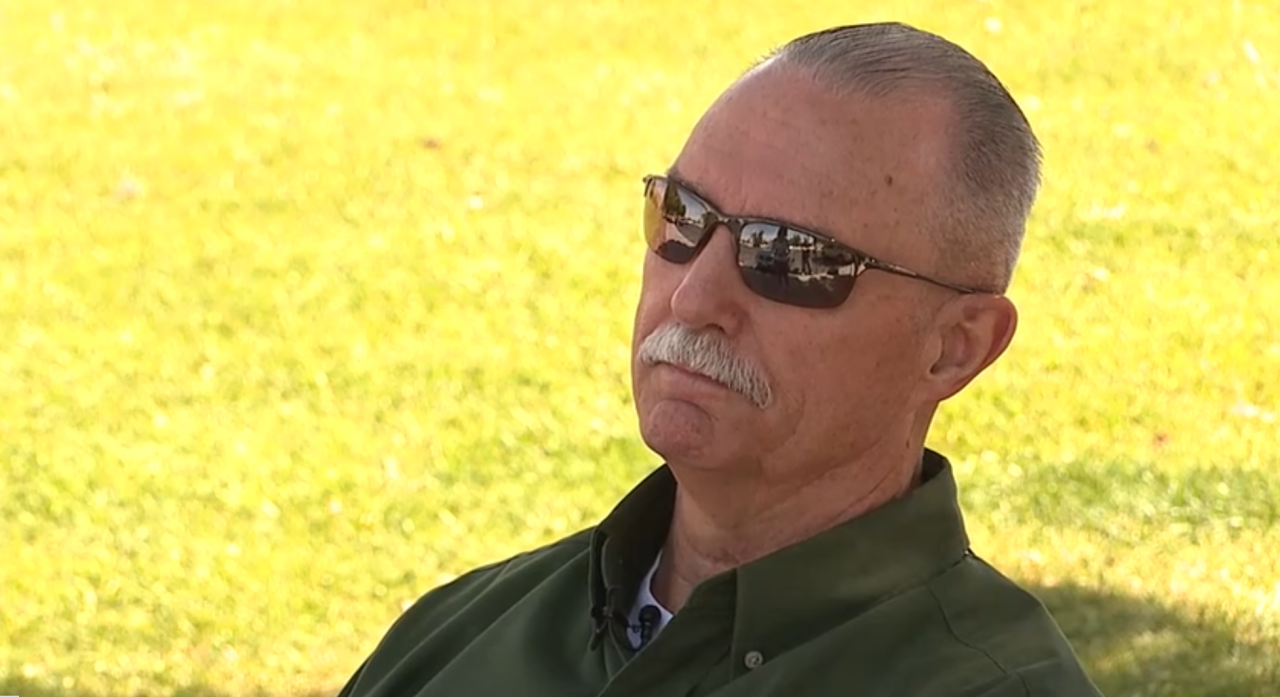
"When I work out, I drink a lot of water," Christianson said. "[The bus] left after they picked me up, picked up two other individuals on base, and in the process of being the first one picked up and the last one being dropped off, I had to utilize the facilities and unfortunately, the only way to do that was to cath myself on the bus in front of other people."
Christianson explained that for paraplegics, a full bladder can trigger a dangerous condition called autonomic dysreflexia. It's a sudden, massive surge in blood pressure that can cause a stroke or even death, if not managed immediately.
"I asked the driver to pull the bus over and call in medical, which she did," Christianson said. "An ambulance showed up. Two supervisors showed up."
"All of this because the bus was late," I said.
"Correct."
"So it's not just missing an appointment or being late to or from work, it's compromising your health," I said.
"Usually, when I get in that type of circumstance, it's a trip to the ER," Christianson said.
Armed with their powerful stories, we went directly to the RTC for answers.

"Darcy, let me start this off by saying we recognize our paratransit customers rely on this service every day and right now, we are not meeting their expectations," Gassier said. "For that, we truly apologize."
Gassier told us the service isn't meeting RTC's expectations, either.
"What I can tell you is we are all hands on deck right now working side by side with our technology providers through this transition period," she said. "We have been surging our resources to make sure we have additional customer service center staff to assist. There isn't a need for a customer to have to call the customer service center and then schedule another appointment to work through their app. We're doing it in real time, as soon as they call in and tell us what challenge they're experiencing."
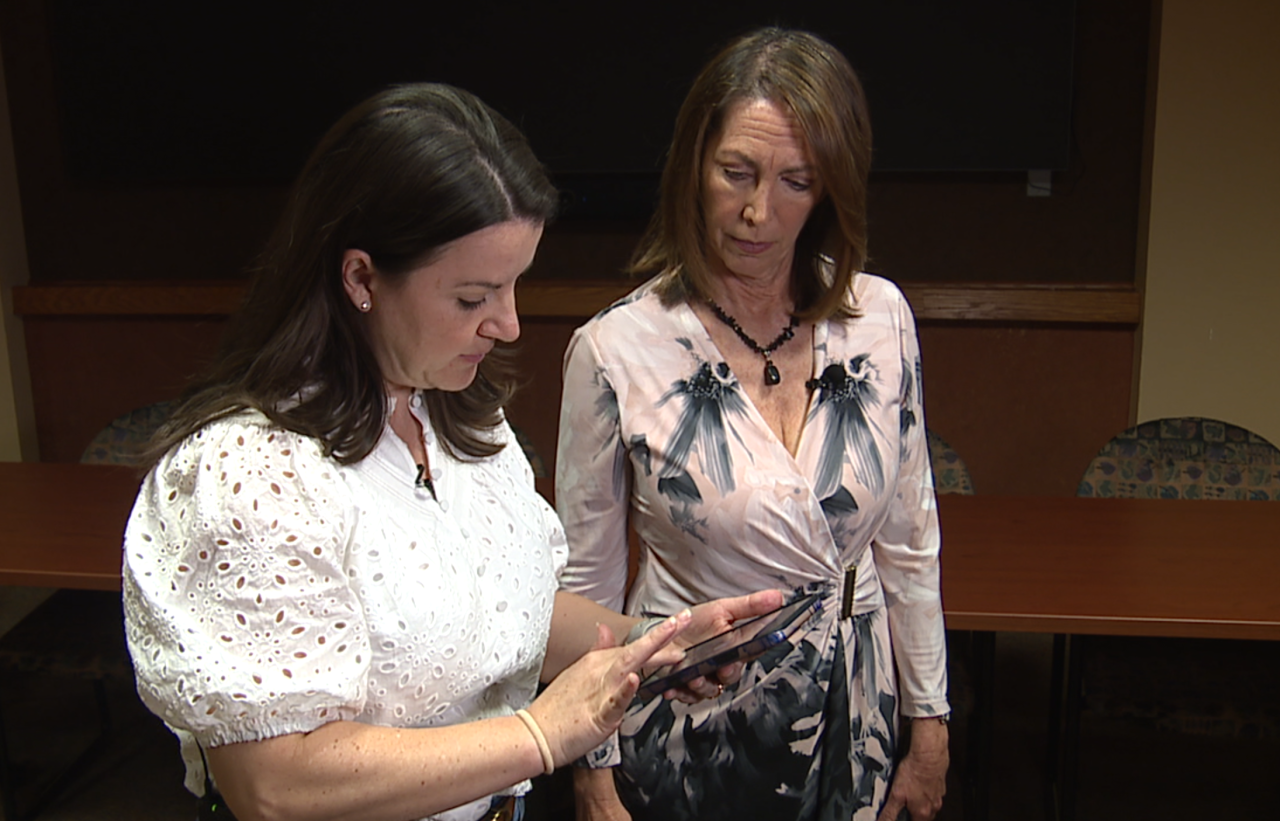
RTC paratransit director Antonette Braddock showed us how the app is supposed to work.
However, riders we spoke with are left wondering: If RideCo already operates in bigger cities, why has this transition been such a mess?
"It's my impression that it should be a plug and play. It was based on ride systems that were in place in these other cities, so the circumstances should have been easily done. Put the new equipment in, plug it in, run a few tests, do a transition," Christianson said. "All of this was supposed to have been up and running on March 11, and we're now well into a month and several days later, and they'vre having equally as many problems now as they had up front."
In an email to Christianson, RTC CEO M.J. Maynard-Carey said she had "very tough conversations" with RideCo's CEO to express her "complete dissatisfaction."
"They don't have control of this. I would have fired this company," Christianson said. "I would have found another mechanism to hold their feet to the fire. Had they worked for me, they would have been gone."
WATCH PART 2: RTC, RideCo officials weigh in on paratransit issues
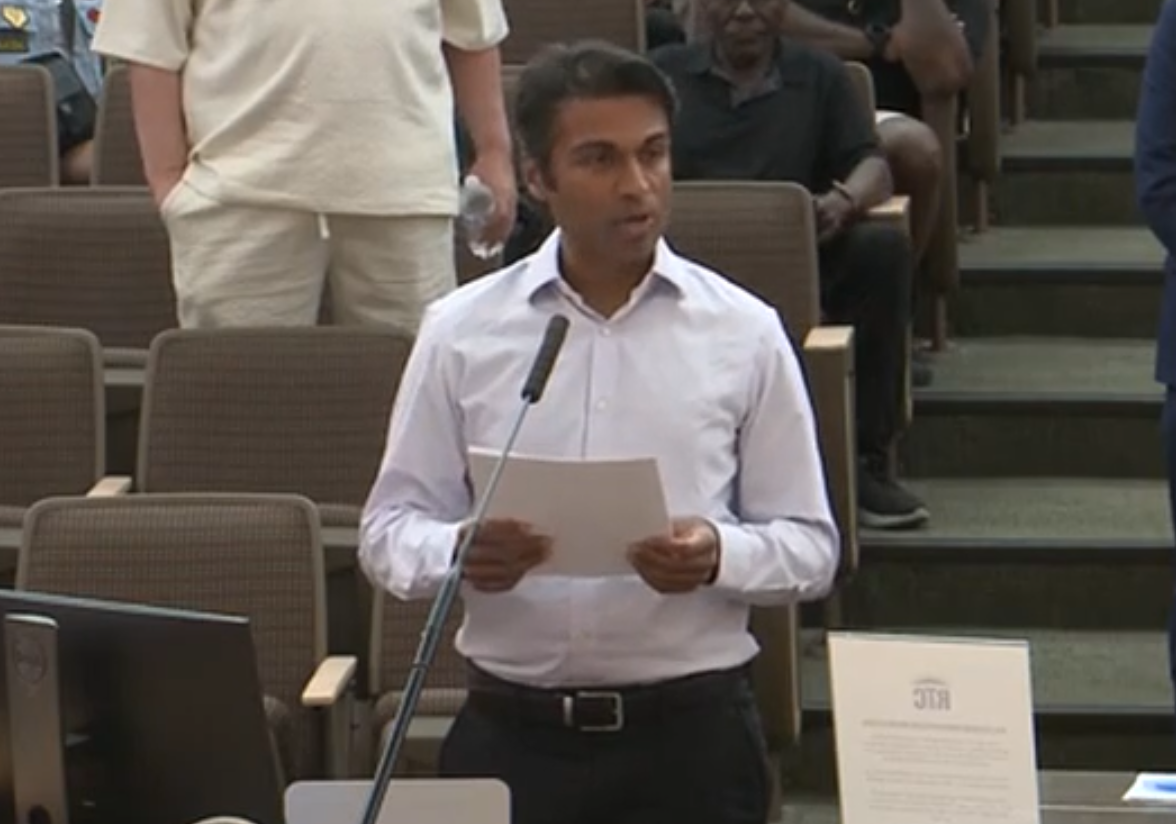
Earlier this month, RideCo's team flew to Las Vegas and its CEO directly addressed the RTC's board.
"We have been working with the operations partners to ensure all parts of the transition are improving. We continue to see service improve week by week with better reliability and ease of use. A meaningful segment of riders are experiencing shorter and better on-board travel times. Our teams are closely monitoring every part of the service, making adjustments, and prioritizing the issues that matter most to you," CEO Prem Guru Rajan said. "We know that trust is earned through consistent, reliable service, and we are committed to earning that trust."
We reached out to RideCo directly to ask what's the deal. They tell us RideCo staff have been here in Las Vegas for weeks getting ready for the launch. Teams have remained on-site through the actual launch, and they're still in Las Vegas as they make progress on getting the system up to par.
"There's an improvement literally every week, week over week. We're looking to get to a level where we stabilize the service to meet the standards, the service standards that we've laid out," said John McLeod, RideCo's marketing director. "That will still take a number of weeks."
I asked why it wasn't ready when they rolled it out. They blame a number of issues, including data transition from the old system, login issues with the My Ride RTC Para App, and misleading ride status communications.
"All of those are things that are being focused on by the teams, both with us and the partners to make sure that we're working through those, driving to resolution to continually improve the service day to day," McLeod said.
What does RideCo have to say to riders like Ramirez, Halford, and Christianson?
"Stranding any rider is definitely not part of the transition. In that case, of the riders that had a situation like that, I would say that experience is absolutely unacceptable and we acknowledge the challenge that absolutely would have caused for you," McLeod said. "That does not meet the standard of service that we hold ourselves to deliver. It also highlights the importance of each and every ride, and that's what we focus on for that rider experience."

So what about the elected officials who oversee the RTC?
We asked for interviews with Clark County Commissioners Justin Jones and Tick Segerblom, who both sit on the board. We wanted to know why more isn't being done to hold the RTC accountable. The county's public information office shut us down, directing us back to the RTC.
Christianson said that's exactly what he got from Jones in a recent one-on-one meeting.
"Commissioner Jones didn't give me any straight answers, didn't give me a timeline or a deadline, didn't offer to set me up with RTC," Christianson said. "He just basically nodded his head a lot and said, 'I understand.' That's not good enough."
If these issues aren't resolved, it could cost taxpayers more money. That's because the Americans With Disabilities Act has teeth. It requires public agencies like the RTC to provide a paratransit system that's comparable to its regular bus service.
Lawsuits have been filed in other states for not providing adequate service. For example, the U.S. Attorney's Office reached a settlement with New Jersey Transit in 2022 after the NJ Transit's Access Link "subjected a number of ADA paratransit eligible riders to excessively long trips, late pickups, late drop-offs, and excessive telephone hold times."
“Without equal access to public transportation, people with disabilities are deprived of the opportunity to engage in society on an equal basis,” U.S. Attorney Philip R. Sellinger said at the time. “This agreement removes discriminatory barriers by ensuring that thousands of Americans with disabilities have equal access to public transportation throughout New Jersey.”
Ramirez, Christianson, and Halford hope it doesn't take a court case to force meaningful change here in Las Vegas.
"We're kind of stuck with the system, and we're just trying to make it a little bit better for all of us," Halford said.
Our paratransit system here in Las Vegas is the seventh-busiest in the country. While there's no timeline for a full fix on all of the new app issues, the tide is beginning to turn now that we're more than a month in, with some buses even starting to arrive early. We'll keep tracking it to make sure things continue to improve.
