



LAS VEGAS (KTNV) — Peaceful protesters were shot with pepper balls, arrested but never charged, and blocked from exercising their First Amendment rights at a June 2025 anti-ICE protest in downtown Las Vegas.
WATCH: Metro police rewrite protest policy after anti-ICE demonstration lawsuits
Now, after lawsuits alleging excessive force and unconstitutional policing, the Las Vegas Metropolitan Police Department has quietly rewritten its protest policy. But some wonder whether the changes will stick.
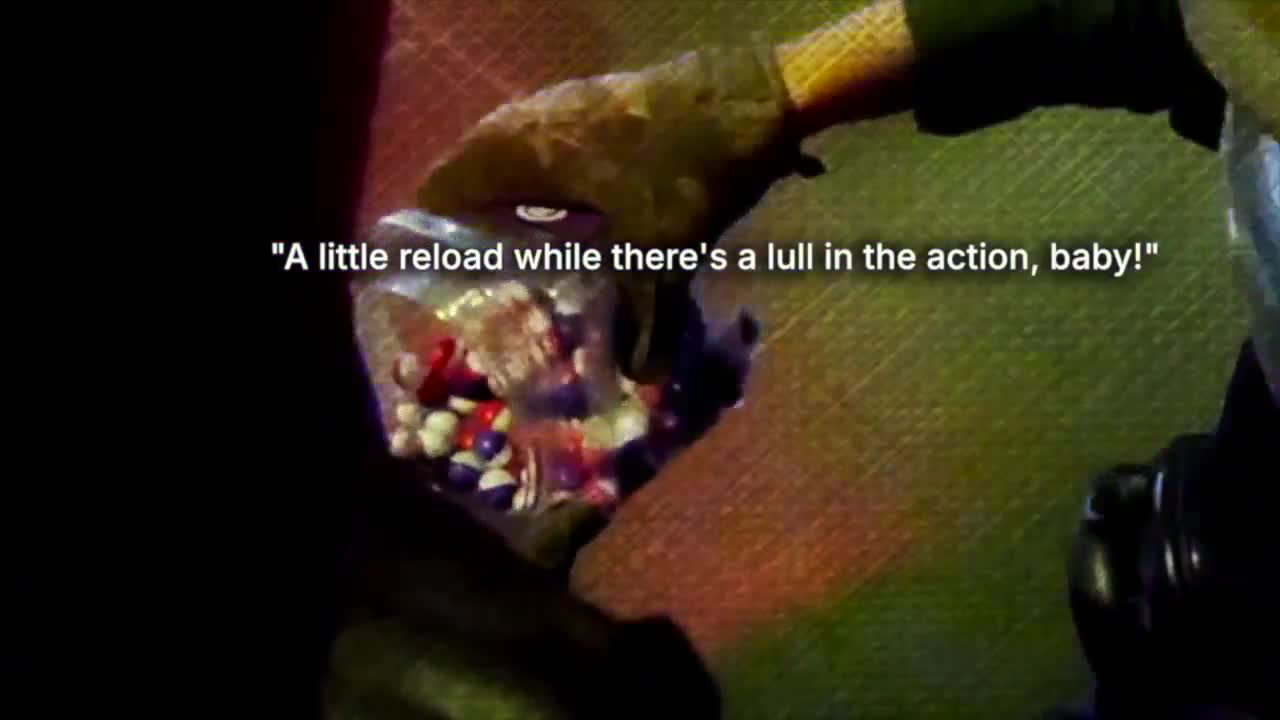
Bodycam footage captured SWAT Officer Mark Eshe joking and laughing with other SWAT members while firing pepper balls at what video shows are peaceful protesters during the demonstration.
"A little reload while there's a lull in the action, baby," Eshe said.
As another officer poured pepper balls into his gun, Eshe said, "That's good, my brother."
"Alright. Have fun," the other officer said. Eshe laughed.
Additional body cam footage captured Eshe shouting, "Let's kick some (expletive) ass."
Emmanuel Beltran, seen in video wearing pink shorts and a black shirt, was shot multiple times with pepper balls while leaning against a light pole, watching the protest.
"I kind of felt like Metro was always kind of an upstanding police department as far as the way they handled themselves in the community," Beltran said. "That night kind of just painted a different picture in my mind."
Beltran wasn't just shot — he was arrested that night but never charged with a crime.
"When I got arrested, I was trying to get back to my car, away from the protest at this point," Beltran said. "And just the simple fact that they said they were not going to let me go because the orders came from above, no matter what the situation was, I was in the vicinity. It's kinda terrifying."
Those "orders from above" trace back to Assistant Sheriff Bryan Peterson, who was the deputy chief over SWAT at the time. Bodycam footage shows Peterson saying, "I want to isolate them and arrest every one of them."
Attorney Stephen Stubbs, who represented Beltran, said LVMPD's actions raised serious constitutional concerns.
"You can't take the bad acts of a few and then extinguish and terminate the First Amendment rights of everybody else," Stubbs said.
Beltran's lawsuit against LVMPD settled for $150,000. Stubbs also represented Karlin Martinez, who was arrested while livestreaming after the protest ended.
"At that moment, I was in disbelief," Martinez said.
Her livestream captured the entire arrest. Metro Sgt. Fred Oliveri was recorded saying, "You enjoy your night? You enjoy your night?"
"I didn't say anything," Martinez responded.
"You should've shut your mouth too. You should've left hours ago," Oliveri said.
"I didn't say anything," Martinez said.
"Well, now shut up," Oliveri said.
Like Beltran, Martinez was never charged with a crime. Metro settled her lawsuit for $325,000.
"This, to me, was worth it. Because it's not just for me. It's changing the life of somebody else as well," Martinez said. "Anybody that gets put in that situation. It's uncomfortable to be in, completely ... feel violated."
Those lawsuits, and the 13 Investigation — first reported last year — were followed by sweeping changes to Metro's protest policy. Documents obtained by 13 Investigates show the revised policy is dated August of this year. It is nearly twice as long and far more detailed, especially when it comes to dispersal orders and pepper-ball use.
Nevada ACLU executive director Athar Haseebullah noted the timing of the policy change.
"I think the timing is — somewhat speaks for itself with respect to lawsuit settlements occurring and then engaging in corrective action, but corrective action could be a good thing here," Haseebullah said. "I'm hopeful that with the new policy changes, new trainings, and new monitoring on their end as well as continued monitoring on our end and other attorneys' end, that maybe we can get to a stage where people are able to exercise their First Amendment rights without the fear of local law enforcement."
The revised policy puts new emphasis on "actively facilitating" peaceful First Amendment activity. Dispersal orders must be based on time, conduct and context — not simply where someone is standing.
The policy also creates a new "Last Chance Notice," requiring officers to warn individual people that dispersal orders are in effect and give them a final opportunity to leave. Only then, the policy says, "arrest may be appropriate."
"It leaves me a little hopeful," Beltran said. "Hopeful that they will actually comply with their procedures."
Metro's new policy also makes clear pepper balls are not to be used as a crowd-control tool against everyone at a protest. Officers cannot target people because of protected speech, fire indiscriminately into crowds, or use pepper balls against people who are peacefully leaving. The policy says pepper balls should be directed at the ground, not people.
"Yeah, I feel that accomplishment, and it's not just mine. I feel like it's the community's, and Metro's as well because they're the ones implementing it," Martinez said.
"The future's going to pretty much dictate whether or not they follow through with what they say they're going to be doing," Beltran said. "This whole ordeal would leave anybody skeptical of whether or not what Metro says — are they going to be fulfilling what they say?"
As 13 Investigates previously reported, protesters heard similar promises from LVMPD after lawsuits tied to Black Lives Matter demonstrations, when Metro told a federal judge it had learned from past mistakes and would stop using force against non-threatening protesters.
"They changed their policies, showed the court and said, 'Court, we're not going to do this anymore. We have seen the error of our ways.' And then you see situations like this and you just shake your head," Stubbs said.
"What they said is not what they did. So should people be skeptical that it's just more of the same, or are you encouraged that maybe this time will be different?" I asked Haseebullah.
"Well, I think you can be both encouraged by a policy change and still remain skeptical, and certainly I think everybody should remain skeptical of the government at all times," Haseebullah said.
Still, Beltran has a message for future protesters, "To not be afraid of using your voice," and one for Metro, too.
"Do better. Make us want to interact with you guys the same way you would like for us to interact," he said. "I mean, it has to be a mutual relationship between the community and the police department. I really would hope they could do better."
I reached out to LVMPD asking for an on-camera interview about what prompted the policy changes, how it plans to enforce them, and what accountability measures are in place. They did not respond.
