

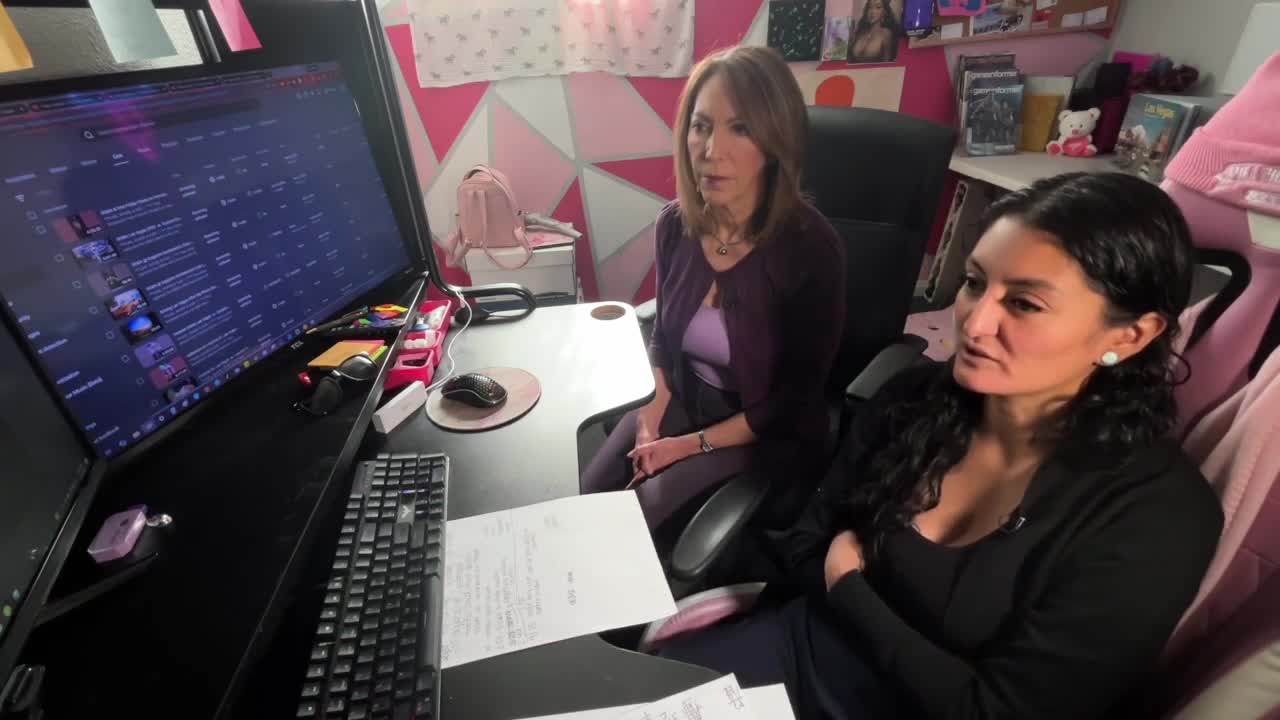


LAS VEGAS (KTNV) — Criminal cases are failing. Lawsuits are growing. And Las Vegas taxpayers are picking up the tab.
The Las Vegas Metropolitan Police Dept. has steadfastly defended its response to the June 2025 anti-ICE protest in downtown Las Vegas, but legal cases tied to some arrests tell a different story.
Two federal lawsuits against Metro stemming from the protest have settled for a combined $475,000 — cases in which neither person was ever charged with a crime.

13 Investigates
Videographer arrested at Las Vegas ICE protest prepares to sue Metro
The settlements are the latest legal fallout from a protest that resulted in 94 arrests but very few prosecutions. Attorney Stephen Stubbs, who represents both plaintiffs, argues the cases reflect a pattern of policing designed to silence critics rather than stop crime.
Karlin Martinez, a local TikTok and YouTube livestreamer, was documenting the downtown protest against federal immigration tactics when she was arrested near its end. She was standing next to another internet content creator, Cesar Corrales, who was also livestreaming, and also arrested.
Video from just after midnight on June 12, 2025 captured the moments before their arrests.
WATCH | Las Vegas taxpayers pay nearly $500K to settle lawsuits over ICE protest arrests
Officer: Enjoying yourself?
Karlin Martinez: You know, covering everything.
Sgt. Fred Oliveri: You got nothing better to do?
Martinez: No.
Cesar Corrales: How 'bout honor your oath? Honor your oath, b——. How about that? Honor your oath... Oh, here we go.
At that point Sgt. Oliveri turns around the group of officers he's walking with as they leave the protest area.
Martinez: I didn't do nothing! I didn't say nothing!
Sgt. Oliveri: You're supposed to get lost! This guy goes to jail. He goes to jail. Let's go.
Martinez: I'm just watching! I'm watching! I didn't do nothing!
Sgt. Oliveri: You enjoy your night? You enjoy your night?
Martinez: I didn't say anything!
Sgt. Oliveri: You should've shut your mouth too. You should've left hours ago.
Martinez: I didn't say anything!
Sgt. Oliveri: Well, now shut up!
Officers tackled Martinez and arrested her.
"You've got a tablet in my face! Shut your (expletive) mouth and walk!" Oliver yelled.
Another officer was captured on the livestream saying, "It's on live. Somebody needs to end the video."
Martinez was never prosecuted. Neither was Corrales.
"What crime did you commit?" I asked Martinez.
"Being brown is a crime, I guess," she said.
Martinez said the arrest changed her understanding of how First Amendment rights can be disregarded.
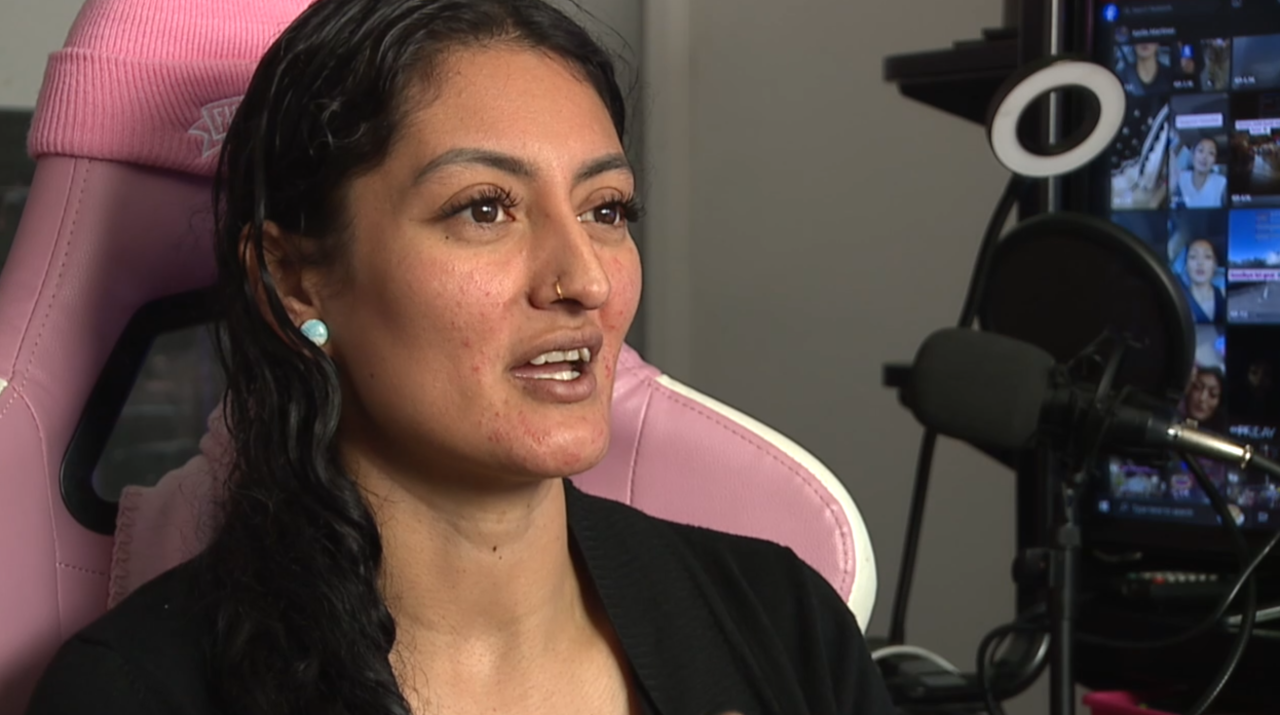
"So, the law is above the law? Is that what I'm understanding? You just start to question everything. Like, what steps can we take now?" Martinez said.
She hired Stubbs and sued Metro for excessive use of force, wrongful arrest, and unconstitutional policing.
"What do we say to those who claim you just have to do what the police tell you? You can't yell at them. You can't talk back. You can't keep trying to videotape them when they've told you to leave. How do we address that?" I asked.
"The courts have clearly stated we have a First Amendment freedom of press right to record police in their official capacity in public," Stubbs said. "Courts have also said that you're allowed to criticize police. And even say nasty things to police, as long as they aren't fighting words."
In Martinez's lawsuit, Stubbs argued she was arrested even though "her words were respectful and not offensive" — and because she was standing next to someone police accused of "running his mouth," which Stubbs emphasized is not a crime.
Her lawsuit also states she was "tackled and arrested for Failure to Disperse" hours after "a dispersal order (she) never heard and her live-streaming cameras never recorded."
In a videotaped deposition taken for another of Stubbs' federal protest cases, Undersheriff Andrew Walsh said protesters who arrived after a dispersal order was issued could still be subject to that order.
"Because we've declared that the behavior of the crowd is unsafe for the community so, more people showing up after the fact... you can't start and stop," Walsh said.
Walsh also confirmed in the deposition that protesters who followed directions and moved away could still be arrested for failure to disperse if they reassembled.
"The protest is over," Walsh said.
Stubbs pressed Walsh on how far away protesters would need to go to continue exercising their First Amendment rights without risking arrest.
Stubbs: So, the dispersal order isn't applicable in Summerlin, correct?
Walsh: Yeah, you were asking earlier about the geography. I would say that's far enough away.
Stubbs: Ok. How are protesters supposed to know how far away they need to go to continue protesting and not get arrested for failing to disperse?
Walsh: Great question. I don't know the answer to that.
The answer should come from one of Stubbs' court cases. But it won't come from Martinez's. Metro settled her case for $325,000 out of court.
Stubbs also filed a lawsuit for Emmanuel Beltran, who was downtown with his cousin the night of the protest. Beltran said he had not known there would be a protest but decided to join in.
Body camera footage shows officers firing hundreds of pepper balls at peaceful or retreating protesters. Beltran, visible in pink shorts and a black shirt, was shot as he leaned against a light pole. SWAT Officer Mark Eshe re-aimed and continued firing as Beltran turned to walk away.
Beltran's lawsuit states he "was no threat, committed no crime, was directly targeted by SWAT, and was shot with three (3) pepperballs."
"You can't take the bad acts of a few and then extinguish and terminate the First Amendment rights of everybody else," Stubbs said.
Despite denying and disputing Beltran's claims, Metro settled his case in August for $150,000 without admitting liability.
The combined $475,000 for the two settlements comes from Metro's self-funded insurance pool. Officers pay into that pool from their salaries, which are funded by tax dollars.
Martinez has continued her regular livestreams, mostly in the Fremont Street area, hoping to drive policy change in how police interact with the public.
"You can't just shut up and deal with it," she said. "The transparency behind it and the accountability behind it is very important because it's bringing safety concerns to the community. And that's what mainly my focus is. I should feel safe. You should feel safe."
While Metro's cases against ICE protesters have fizzled out, ICE has turned up the heat in Southern Nevada. Using data collected by UC Berkeley's Deportation Data Project, the Nevada Independent reported ICE arrests hit record highs in Las Vegas last summer: 203 people were arrested in just two weeks from late June to early July, and 301 in July, mostly in Southern Nevada, many with no criminal record.

