


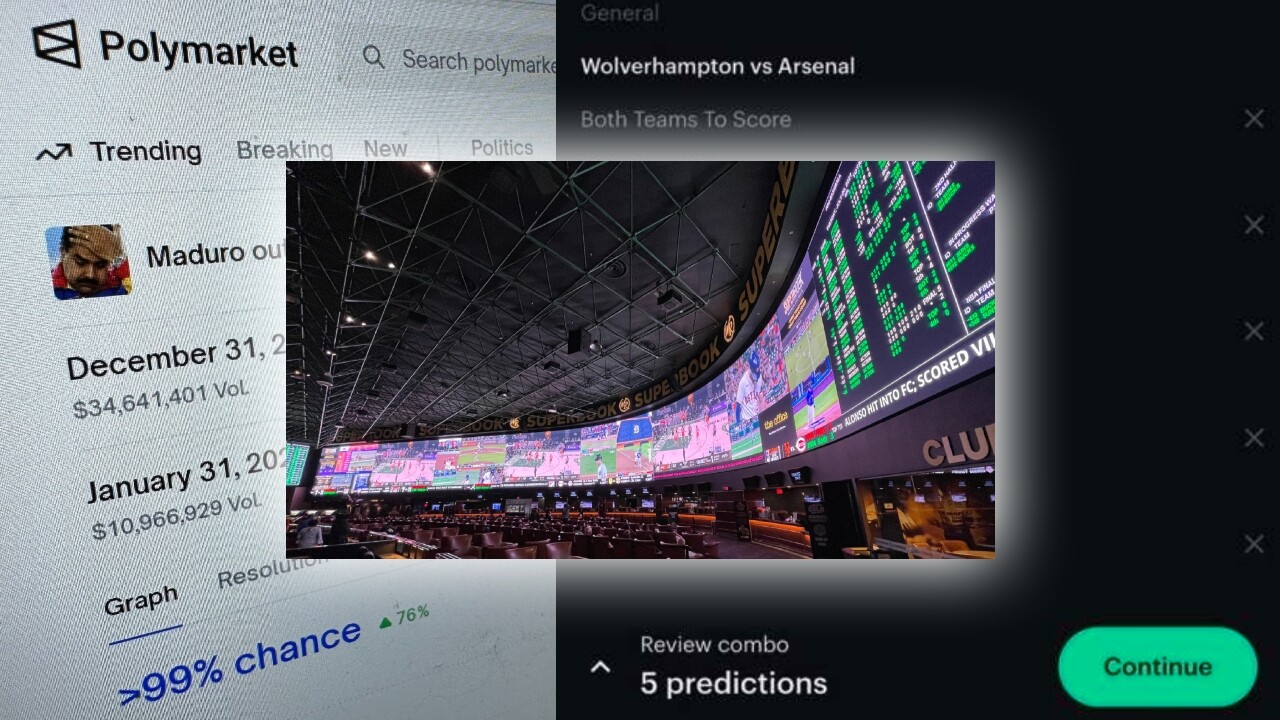

LAS VEGAS (KTNV) — Should predictive markets be banned in Nevada?
It's a question that has been weighing heavily on state officials.
This week, the Ninth Circuit Court of Appeals ruled in favor of the Nevada Gaming Control Board that prediction market Kalshi can be banned from offering sports contracts in Nevada.
The board, as well as Nevada Attorney General Aaron Ford, have also filed a civil enforcement action with Carson City District Court to try to completely block Kalshi from operating in Nevada. They issued a cease-and-desist letter to Kalshi last March.
"The Board considers offering sports event contracts, or certain other event contracts, to constitute wagering activity under NRS 463.0193 and 463.01962 and, therefore, entities offering such event contracts must be licensed," a press release states. "The Board has deemed Kalshi's operations to be unlawful in Nevada and in violation of NRS 463.160, NRS 463.350, NRS 465.086, and NRS 465.092."
You can read the full complaint below.
"The Board continues to vigorously fulfill its obligation to safeguard Nevada residents and gaming patrons, and uphold the integrity of a thriving gaming industry," Chairman of the Board Mike Dreitzer said in a statement.
The Nevada Resort Association is standing by the Gaming Control Board. According to a Tuesday court filing, association officials stated that Kalshi is not following Nevada law, which is causing "real-world financial consequences."
"It chose to proceed headfirst to disrupt the status quo rather than obtain approval for the untested legal basis for its operations," the filing reads in part. "Kalshi now asks this Court for the extraordinary relief of staying the enforcement of Nevada law, just so that Kalshi can continue to violate that law and reap unfair profits while NRA's members play by the rules."
Both the Board and the Association pointed to the Super Bowl as an example of how Kalshi is harming Nevada gaming.
Earlier this month, the Nevada Gaming Control Board released numbers showing the total amount of wagers was the lowest its been in 10 years.
You can see those numbers below.
According to Kalshi, the company saw more than $1 billion in trading volume on Super Bowl Sunday, which was up 2,700% year-over-year. That includes key pools like over $113 million on which song Bad Bunny would open his halftime show with and $47 million on which artists would perform alongside him.
Those types of bets are concerning to the Nevada Resorts Association.
"Kalshi's newest bets look nothing like financial instruments. For instance, Kalshi's numerous Super Bowl offerings included bets on whether a non-quarterback would make a 'pass attempt' and whether there would be a successful two-point conversion," their Tuesday filing states. "These wagers are the same as the sports bets offered by state-licensed sportsbooks and do not qualify as 'swaps' under the Commodity Exchange Act."

During last week's Gaming Control Board meeting, board member Judge George Assad asked Dan Shapiro, the Senior Vice President and Chief Development Officer for Caesars Digital, if predictive markets affected their sportsbooks.
"I think it's difficult to say. We've all looked at the Nevada results that were published publicly and studied them and I think a lot of us expected the handle to be down. The match-up and the star power kind of just wasn't there like in previous years but we were pretty pleased with it," Shapiro said. "It wasn't the best result for us, results-wise, with the Seahawks winning and covering. I think, generally, that was sort of the trend, was kind of what we saw reported publicly. So there could be a lot of factors in there. If you look at prediction markets, you can't say it was zero."

Sports isn't the only thing that Kalshi allows people to place bets on.
Back in November 2024, we told you how Kalshi was taking bets on elections and was advertising odds on the Las Vegas Strip.
NOVEMBER 2024: What do you think about presidential election betting?
Kalshi is not the only predictive market that Nevada regulators are concerned about. They are also keeping a close eye on Polymarket.
The Nevada Gaming Control Board has also filed a civil enforcement action against Blockratize, Inc, the corporate entity behind Polymarket.
"In its complaint, the Board asked the court for a declaration and injunction to stop Polymarket from offering unlicensed wagering in violation of Nevada law," a press release states. "Nevada's public policy, as expressed by the Legislature, is that the gaming industry is vitally important to the economy of the state and the general welfare of the inhabitants and therefore must be licensed, controlled, and assisted to protect the public health, safety, morals, good order, and general welfare of the inhabitants of the State."
You can read the full complaint below.
Gaming regulators in more than 20 states have filed legal challenges against Kalshi and other prediction market companies. Last week, Congresswoman Dina Titus introduced legislation to address the expansion of prediction market "event contracts", citing growing risks to consumer protection and the integrity of regulated markets.
It's called the Fair Markets and Sports Integrity Act, or House Resolution 7477. It would amend the Commodity Exchange Act to prohibit entities registered from engaging in transactions involving sporting or casino-style event contracts.
"Consumers deserve transparency, accountability, and protections against predatory practices," Titus said in a statement. "Without meaningful oversight, these platforms expose users to misleading financial risks, while diverting revenue away from states and tribes that rely on regulated gaming to invest in their communities.”
The Commodity Futures Trading Commission currently regulates prediction markets. That federal oversight is currently allowing Kalshi and Polymarket to operate in all 50 states, even states where gambling is illegal.
Recently appointed CFTC chairman Michael Selig recently wrote an opinion piece in The Wall Street Journal, signaling support for the prediction markets.
"The CFTC will no longer sit idly by while overzealous state governments undermine the agency’s exclusive jurisdiction over these markets by seeking to establish statewide prohibitions on these exciting products,” the article reads in part.

However, Sen. Catherine Cortez Masto disagrees. In a statement, she said the CFTC is stepping on states rights and "Congress did not give the CFTC the authority to regulate sports gaming or gambling of any kind. That is a power that falls to the states."
The CFTC is also trying to weigh in on proceedings here in Nevada with the agency filing a "friend of the court" briefing with the U.S. Court of Appeals for the Ninth Circuit.
"Event contracts allow businesses and individuals to hedge event-driven risks, enable investors to manage portfolio exposure, and provide the public with information about the outcome of future events," Selig said in a statement. "These products are commodity derivatives and squarely within the CFTC's regulatory remit. As I've said before, the CFTC has the expertise and responsibility to defend its exclusive jurisdiction over commodity derivatives, and that's exactly what we'll do."
You can read the CFTC court briefing below.
Kalshi has previously released a statement saying that with CFTC approval, they "operate under a strict regulatory framework" and they look forward to working with Congress and regulators to ensure that prediction markets remain safe, fair, and open.
You may also remember that last week Selig announced the CFTC would create an "Innovation Advisory Committee" to help draft regulations on issues like prediction markets. When looking at the list of 35 people that make up that panel, it includes the Shayne Coplan, the CEO of Polymarket, and Tarek Mansour, the CEO of Kalshi.

Donald Trump Jr. is also an investor and unpaid adviser to Kalshi and a paid adviser to Polymarket.
While Polymarket did not disclose the terms of the investment by 1789 Capital, a venture capital firm connected to Trump Jr., a Reuters report states a source said it was in the tens of millions of dollars.
As for what happens next, Selig said to those who disagree with the CFTC regulating prediction markets, "We will see you in court."
I have some big news to announce… pic.twitter.com/3OBNTaOnIL
— Mike Selig (@ChairmanSelig) February 17, 2026