


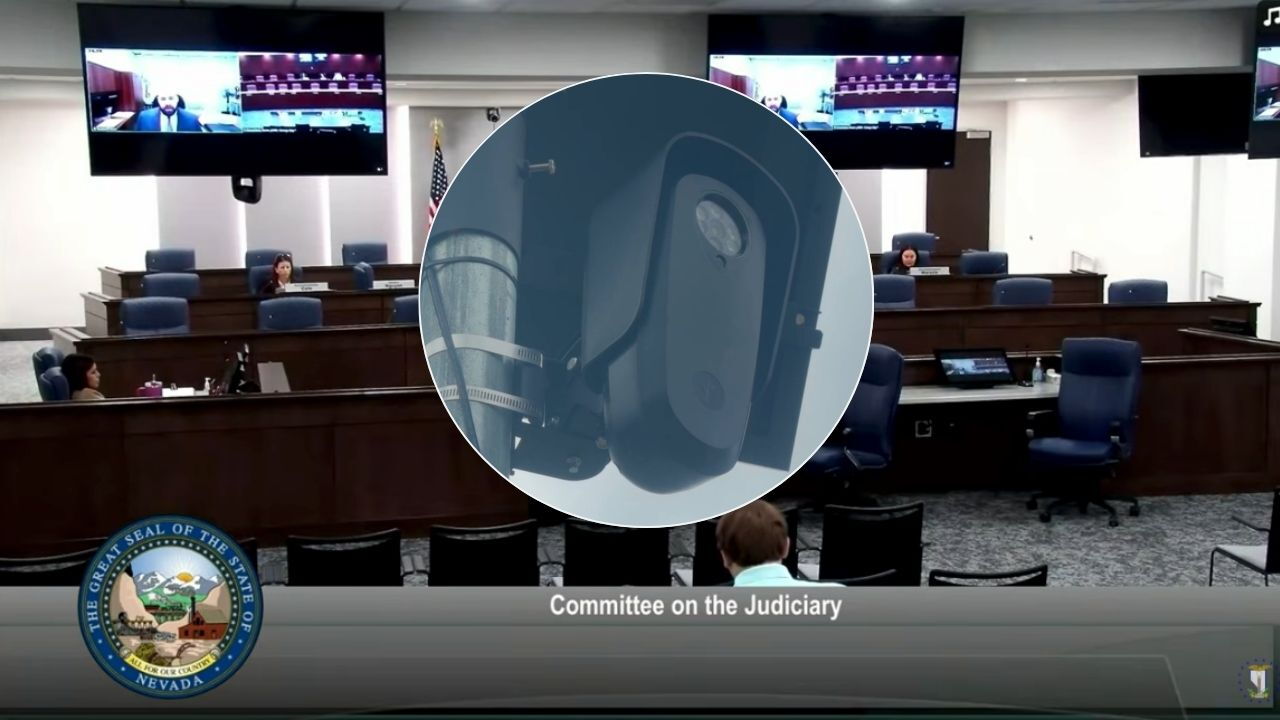

LAS VEGAS (KTNV) — Nevada lawmakers are looking at ways to regulate the use of Flock cameras.
On Tuesday, the Joint Interim Standing Committee on the Judiciary unanimously approved a draft bill request to:
- require agencies that use license plate reader cameras to adopt written policies
- train authorized users on lawful use and data protection requirements
- undergo independent audits for compliance for adopted policies
- submit annual reports on license plate camera reader activities, audit findings, and policies to the Attorney General, Governor, and legislature
During the committee meeting, Assemblymember Brittney Miller said she knew this was a hot topic with people across the state.
"I know there's a lot of questions and concerns, and we hear a lot from the public on this and issues that we've seen not just locally but nationally as well, especially around the abuse and misuse of this type of technology by officers and, of course, constitutional infringement," Miller said.

Committee members also asked if there were laws currently on the books related to these cameras. There are currently no statutes or standards in place, as of right now. They also stated there is nothing to prohibit law enforcement agencies, private security companies, and other agencies or entities from installing these types of cameras.
Assemblymember Alexis Hansen questioned if it was too early to put together a bill draft request.
"We have not passed any legislation legalizing reading of license plates for, like, citations," Hansen said. "So in some ways, to me, it was like the cart before the horse."
This committee is the only committee that is moving a bill draft request forward regarding these cameras.
"There will be much discussion on this, and it seemed appropriate to at least have a vehicle to hash out those details," Chair Sen. Melanie Scheible said. "If we're able to come to some kind of conclusion about how we should be regulating the use of these cameras, then we can do that with this particular bill."

The bill draft request was developed after proposals were provided by the Clark County and Washoe County Public Defender offices. It was also addressed by advocates at the committee's meeting on July 14.
"We have this mass surveillance tool with absolutely no checks and balances, and there have been documented instances of local law enforcement doing Flock look-ups for ICE. There have been instances of CBP, which is Customs and Border Protection, directly accessing Flock data. We have an instance of Texas police using Flock to conduct nationwide searches for women who got an abortion," said Paloma Guerrero, Deputy Public Defender from the Clark County Public Defender's Office. "This is an unchecked power that needs to be reeled in."
She also told lawmakers that other states are putting legislation in place.
"Minnesota passed a law that went into effect last year that prohibits the use of automated license plate readers to track or monitor specific individuals unless a judge signs a warrant," Kinlock said. "It also created strict data restrictions and retention and prohibited third-party sharing and federal sharing unless there is a warrant. So again, this is not something where we have to reinvent the wheel. We can look at other states that have conducted these regulations for these emerging technologies."
Metro has been using Flock cameras for years and has a network of over 200 cameras across the valley.
The Clark County School District Police Department has been using Flock cameras since August 2024. This week, they released a memo that outlined how the Investigations Bureau uses the system. Two days after that memo came to light, the district backpedaled saying that new CCSDPD Police Chief Jeff Clark is pausing the use of the Flock System cameras until he completes a thorough review.
This issue came up again when the City of Las Vegas was looking into a traffic camera pilot program. Those are not Flock cameras and are not hooked up to the Flock camera system. However, state lawmakers said all cameras are causing concerns because "it's broken the public trust."
Asst. Sheriff Dori Koren said Metro has had some success restoring that trust but the department "still [has] room to go."
"We have to try to educate the community and get feedback to overcome those issues," Koren said. "The feedback we're getting from victims and the community is overwhelming support. Beyond having a data retention period and transparency and auditing mechanisms, I think the other thing we do to address public trust is we need to better educate people on the perceptions in our community."
Editor's note: A previous version of this article accidentally misattributed a quote by Eden Kinlock, State Legislative Affairs Associate for Families Against Mandatory Minimums. The article has been edited to reflect the correct speaker.