


LAS VEGAS (KTNV) — The Boring Company is revealing more about safety and environmental policies and procedures related to its ongoing projects, including the Vegas Loop.
Last week, President Steve Davis answered several questions during a social media town hall about overall progress on the Vegas Loop.
Davis touted how cheap the project is compared to other public transportation systems across the United States.
"If you look at various systems around America, to build a mile of subway tunnel will cost you between $900 million and $5 billion," Davis said. "We're able to build Loop tunnels, for order of magnitude, at $10 million a mile. That's for the tunnel. Obviously, there's more parts of the systems. There's emergency exits. There's stations. There's merge shafts...I think we can get it down to $3 million to $4 million per mile, which is less than it costs to build a highway lane."
He explained that part of the reason it's cheaper is not having to build as much infrastructure out for stations.
"When you think of a subway station, they usually cost a quarter billion or half a billion because the construction complexity is incredibly high to do so," Davis said. "A Loop station is a glorified parking lot. You just need a place for the car to go."
Davis also claimed the Loop is the safest public transportation system in the world.
"So far, in Las Vegas, it's [been] 3.5 million people with no safety or security incidents," Davis said. "For 3.5 million passengers put through Las Vegas, we've had one vehicle get stuck, and we were able to get it out in 170 seconds, so that's just one data point."
According to Davis, the Vegas Loop was inspected by the Department of Homeland Security and awarded the Gold Standard Award, which "is the highest rating possible."
"It looks at 17 categories of security, emergency preparedness, etc., and we got the highest score in the history of public transportation systems."
That being said, there continue to be incidents that are raising red flags.
Drilling fluids dumped into Las Vegas wastewater systems
As Channel 13 reported last month, the Clark County Water Reclamation District fined The Boring Company nearly $500,000 for disposing of drilling fluids and mud into publicly owned treatment works.
District inspectors confirmed "an active illicit discharge of what appeared to be drilling fluids/spoils into the District POTW via two on-site cleanouts and two manholes." A district letter states inspectors asked Boring Company staff to stop, and they refused.
On Aug. 15, the letter states, The Boring Company acknowledged the violations, confirmed it had stopped the discharges, and outlined corrective actions it should take.
The Boring Company was ordered to pay that fine by Dec. 1.

Mystery green pond
Last month, Geneva Zoltek also told you about a mysterious green pond that appeared at a Boring Company construction site on Paradise Road.
Initial Report | The mysterious green pond on Paradise
The Boring Company responded to online speculation by stating it was a temporary man-made pond "used to alleviate/balance loads during construction of subsurface concrete structures, including the visible egress shaft (that connects to the tunnel 25 feet beneath it)."
Company officials also stated they weren't trying to hide anything, that state and county regulators had toured the site, and maintained there are zero health risks to the public.
Channel 13 has confirmed the man-made pond no longer exists. We also reached out to the Nevada Department of Environmental Protection to see if the water was tested. They told us no because there was technically no discharge happening. When we asked for documentation showing that, we were told no formal documentation was filed.
Follow-up | Green pond is gone, but questions still persist
We're working to find out more information about this specific site visit. We have also reached out to The Boring Company to learn how that was mitigated and what happened to the water.
With both of those incidents, there were concerns about materials getting into our water supply.
In his town hall, Davis claimed that's not possible due to the depth at which the company is drilling.
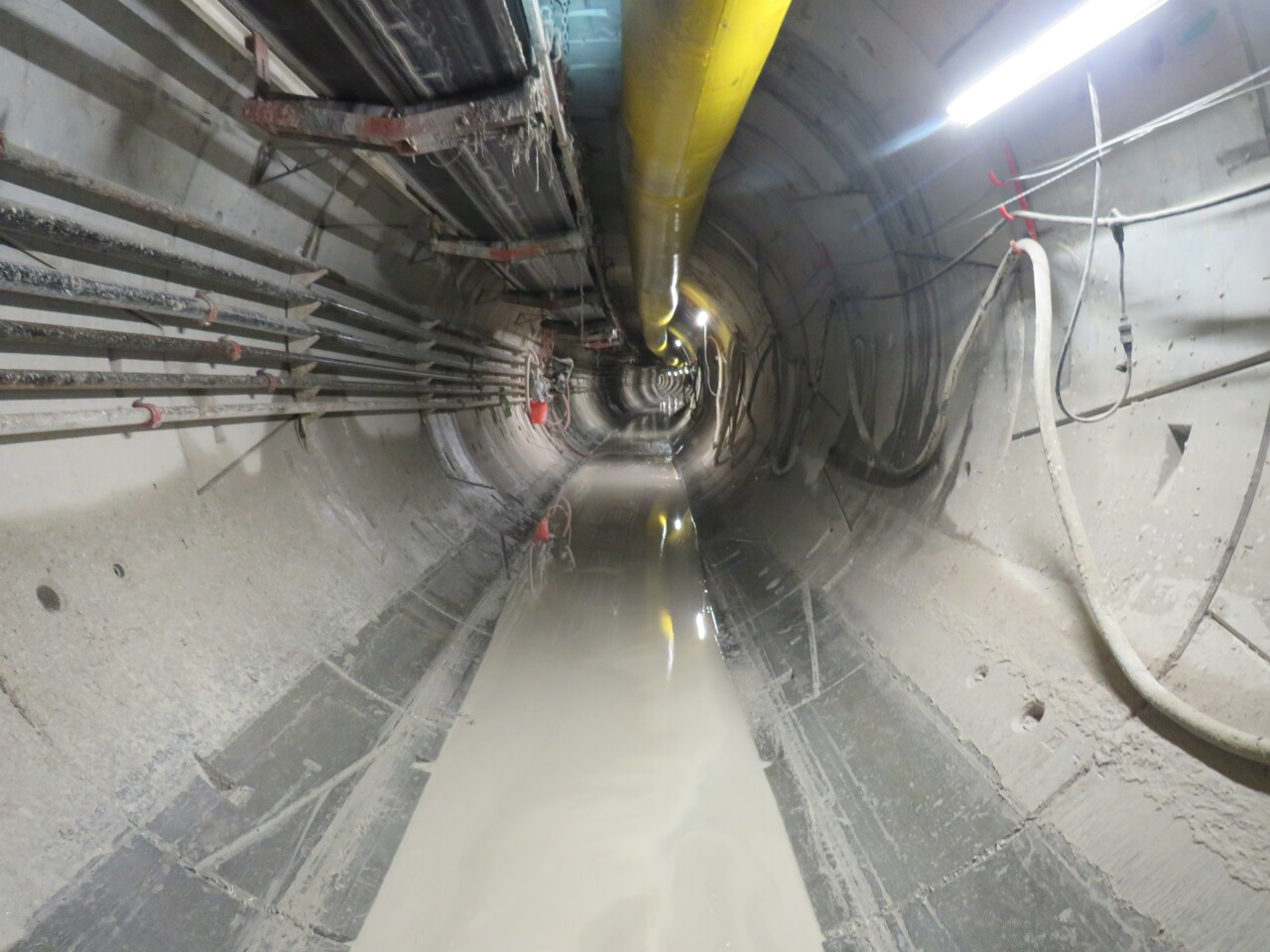
"One thing that is very unintuitive and shocking is that in Las Vegas, even though it's a desert, the water table is below eight to 20 feet below the surface, and our tunnels are about 30 feet below the surface," Davis said. "[That] means 100% of the work that we do in Las Vegas is underwater, and we have to manage that accordingly. It's mostly an engineering challenge."
Davis added that workers look for leaks about once a month.
"All tunnels that are under the water table leak to some amount, including ours. If you go through our 10 miles of tunnel in Vegas, you will likely see a drop of water coming sometime," Davis said. "We have a team that goes once a month and seals up any small leaks. The nice thing is water isn't a safety hazard. In the worst case, if it's a big leak, which is rare, it's mainly tiny drips; it's like rain to a Tesla."
Davis also said the Vegas Loop tunnels are weather-proof.
"There was a flood a few weeks ago, and cars went down the Strip in water. There was one about two years ago that was crazy, where the cars were literally like the standard flood footage you would see," Davis said. "The Vegas Loop never closed. It was completely unaffected by the flood. We have a five-step water intrusion plan that we use."
Tunnel drilling near the surface
When one social media user asked if drilling could interrupt traffic, Davis said no because the company uses road sensors to monitor how close the drills are to the surface.
"We have settlement sensors on the road. On the actual surface, you have these little prisms — they are traffic-rated prisms — every 50 to 100 feet, and 24/7, there's automatic monitoring of those sensors, and there are thresholds," Davis said. "In the history of our tunneling, we've never even crossed the first threshold. If we did, we would be paying attention."
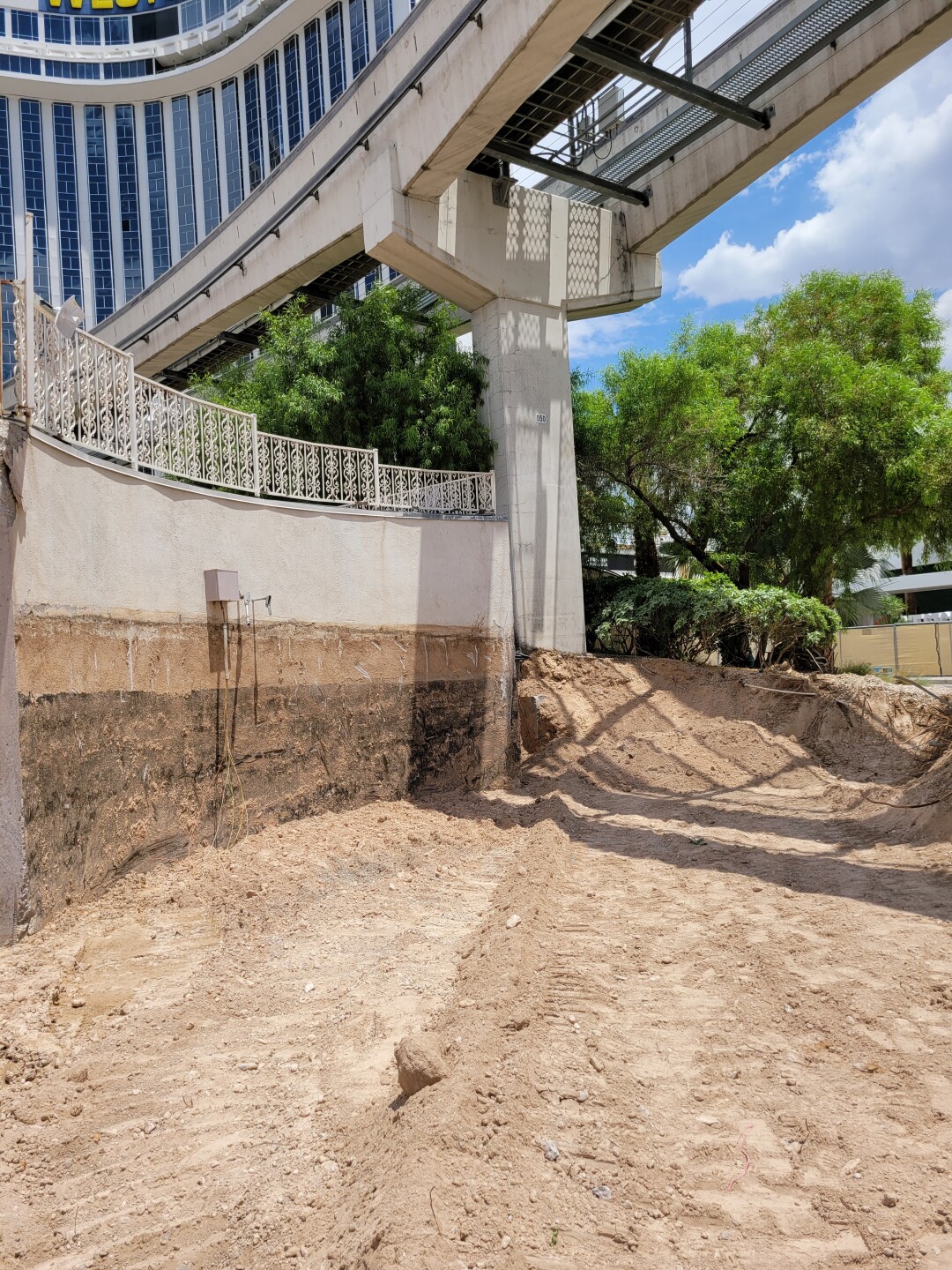
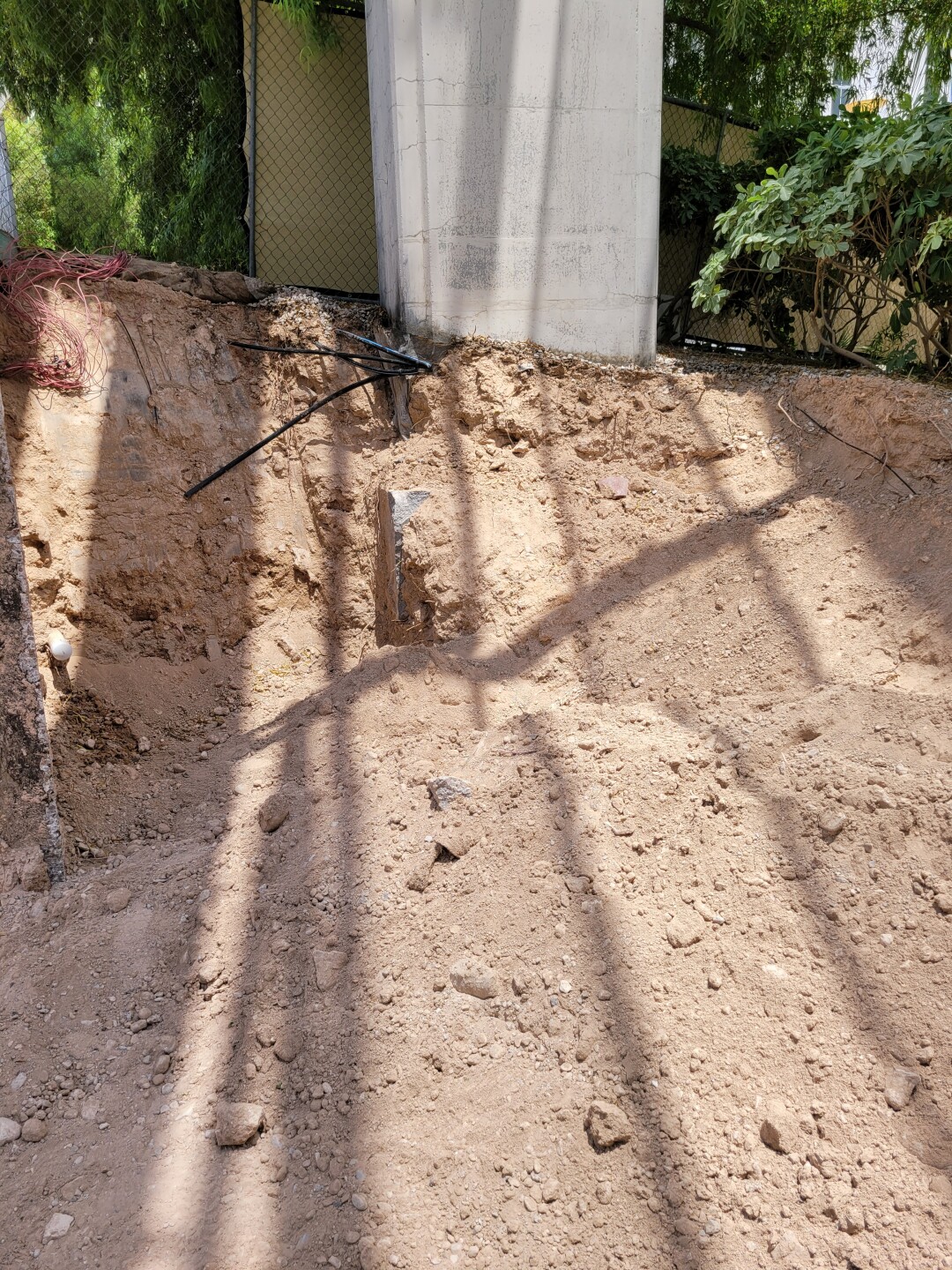
The Boring Company was previously issued three violations by Clark County for two separate incidents where employees drilled too close to pillars that supported the Las Vegas monorail and were doing grading work without a permit, according to documents previously obtained by Channel 13.
The first incident, in June 2023, led to the monorail being temporarily shut down while a third-party engineering firm was brought in to assess the column's structural integrity.

Worker safety
Concerns have also been raised that the Vegas Loop project isn't safe.
In September, a worker was hospitalized with a broken pelvis after being crushed at The Boring Company's site on Paradise Road.
According to OSHA documents, 42 Vegas Loop workers reported injuries in 2023. Those injuries included cuts, sprains, and burns and rashes caused by accelerants in the tunnels. In 2024, the number of injuries fell to just six.
A Nevada OSHA report states that Boring Company employees began contacting them about safety issues in October 2023.
"In the tunnels, employees work with hazardous chemicals and have complained about being provided inadequate PPE (personal protective equipment)," the report reads in part. "They are concerned with the associated hazards and there have been complaints of associated injuries, such as chemical burns."
However, inspectors reported that employees were provided with appropriate PPE. Inspectors also stated that The Boring Company's environmental health specialist trains all employees before they begin working at the site and "routinely performs toolbox talks regarding hazards on site."
Tunnel hazards
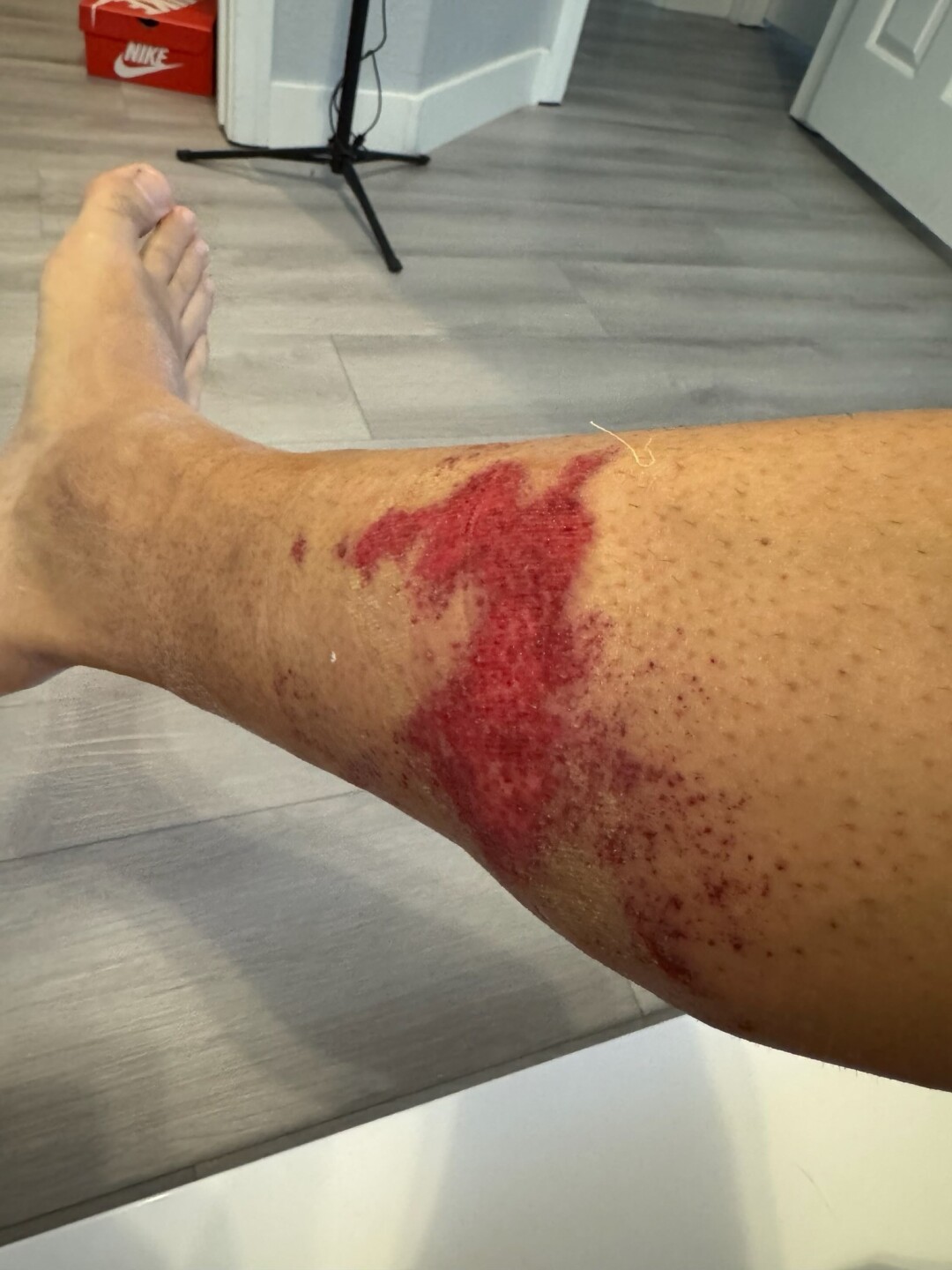
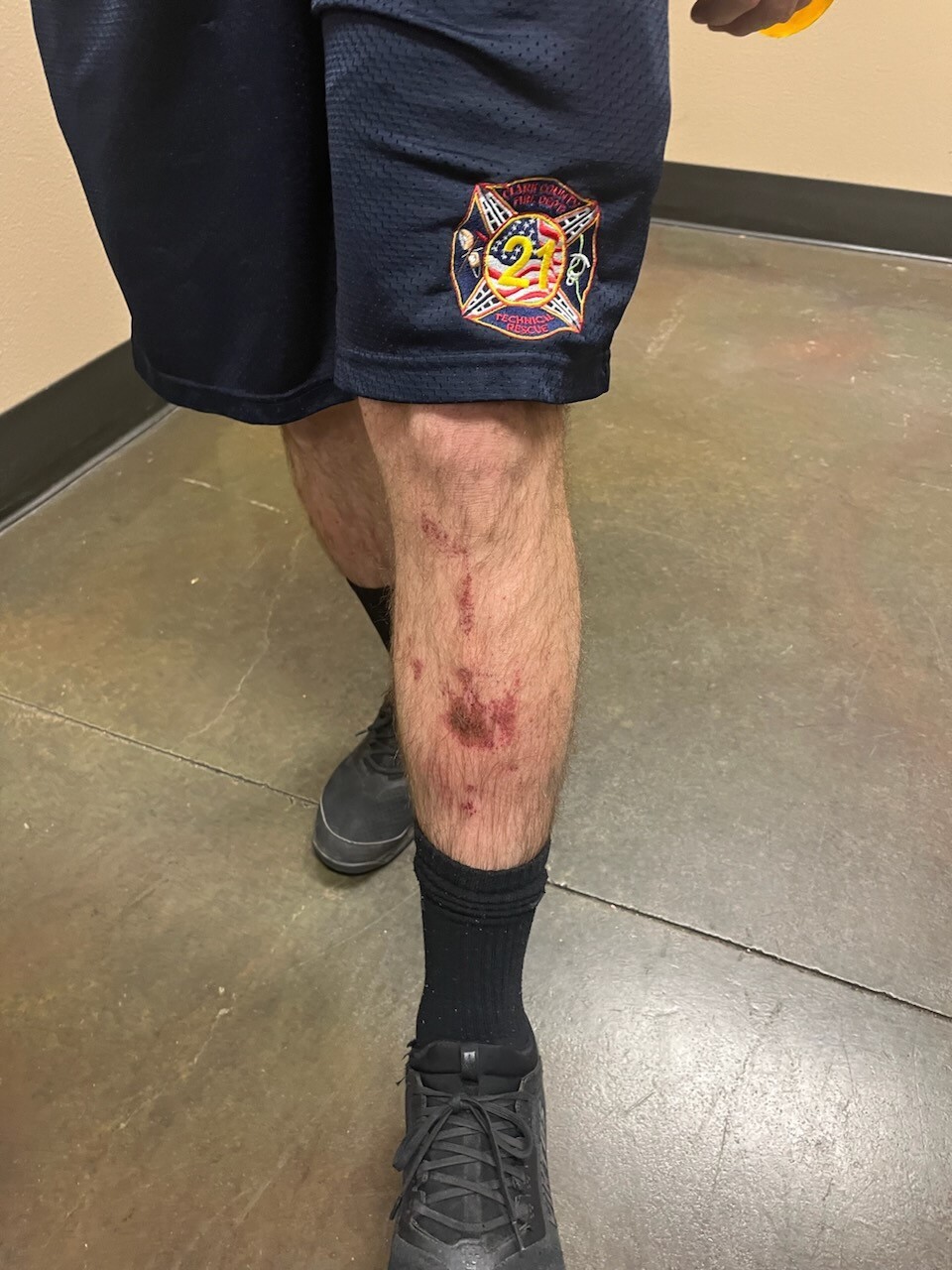
Several injuries occurred after Clark County Fire Department firefighters received chemical burns following a training exercise on Dec. 10, 2024.
"(The Boring Company) had a drill with CCFD, which consisted of 52 members of CCFD. CCFD provided and directed their employees to wear PPE consisting of three layers with the second layer being a chemical barrier," a January OSHA report reads in part. "However, six of the firefighters elected not to wear this layer, including two that sustained chemical burns."
The report also states that a vehicle was provided at one point during the exercise to cut down on the time firefighters were exposed to chemicals in the tunnel. On the first day of the drill, the vehicle was used. However, it wasn't on the second day of the exercise.
A May OSHA report reads that employees were told about one specific type of accelerant that would be present, but not other hazards like "slurry raining down from the ceiling and what chemicals were in the muck that CCFD employees would crawl through."
"Training records were requested but unable to be located by The Boring Company. A powerpoint was recovered that showed that employees were given a brief explanation of the accelerant," the report states in part. "Employees were not told that the chemical hazards would require equipment more than the required 'muck boots' and 'tuck[ing] pants.' Failure to provide this information exposed employees to MasterRoc AGA 41S, which could result in serious eye irritation, as well as cracking or drying of the skin."
The report also states the depth of the muck varies during the day.
"[It] can get deeper than what it is measured at in the mornings, as the tunneling continues and the slurry is poured into and around the machine, the level rises," the report states. "Employees stated that there are spots that are 'lower' and that the mixture can go above the top of their work boots, which measure 15 inches."


Ultimately, Nevada OSHA issued three citations to The Boring Company in May with fines of more than $425,000.
Fines revoked
Those fines were issued on May 28. The same day, The Boring Company reached out to the Department of Business and Industry (B&I) with concerns.
According to a statement from the Department of Business and Industry, B&I director Dr. Kristopher Sanchez met with Division of Industrial Relations administrators, Nevada OSHA, and legal counsel on May 29 to discuss the citations.
"During that meeting, Division legal counsel reviewed the citations (the first time a legal review of the citations had been conducted in contravention of agency best practices) and determined that the citations were in fact legally insufficient, finding that three of the four legal requirements — standard applies, standard violated, employee exposure, and employer knowledge — were not met," an email from the governor's office states in part. "At that time, the decision was made by Nevada OSHA to withdraw the citations pending further review."
The email also states that B&I officials acknowledged the mistakes by Nevada OSHA, which issued the citations.
"Nevada OSHA has a long history of interaction with and oversight of The Boring Company, which includes quarterly meetings with company officials beginning in 2022 before they began digging their first tunnel," the email states. "Nevada OSHA has conducted eight inspections, five of which found no violations and one inspection that resulted in eight citations which were validly issued and currently pending before the OSHA Review Board, an independent board that adjudicates contested cases."
According to the Department of Business and Industry, there are currently two open inspections, and if a violation is found, a citation and notice of penalty will be issued.
Following a viral story by Fortune, Department of Business and Industry officials also stated there was no political interference with the fines process.
"Due to the growing and misguided attempt to paint this as a process tainted by political interference as opposed to what it was, a failure of process that DIR leadership took immediate action to address, we are providing a more specific legal analysis of the citations and the rationale relied upon to withdraw those citations," the statement reads. "This legal review was the only factor that was considered when making the ultimate determination of the validity of these citations."
Other Nevada lawmakers have asked Lombardo and The Boring Company to provide further explanation.
"My constituents deserve answers about why their health and safety are being put at risk by a lack of state regulation and the actions of a company that flaunts local regulations," Congresswoman Dina Titus said in an email statement. "Workers and firefighters in my district should not be subjected to life-threatening conditions working in underground tunnels. It is time to bring the light of day to the Boring project."
Ripple effect
The Vegas Loop project is not the only project that The Boring Company is working on. They are also currently constructing the Music City Loop in Nashville.
This week, workers from an excavation company called Shane Trucking and Excavating told the Nashville Banner that a crew walked off the job over safety issues and back pay disputes.
"We were supposed to be paid every 15 days. And then, they switched accounting firms and then it went from 15 days to 60," the owner told the Banner.
He added it's been more than 100 days since they began the project, and The Boring Company has only paid out 5% of what they're owed. Boring Company vice president David Buss told the Banner the company would pay the invoices, do an audit to find the error, and he didn't believe the company has a common practice of missing payments to vendors.
There are also safety violations at that site.
According to our Scripps affiliate in Nashville, The Boring Company reviewed video footage from the past two weeks, claiming it found “100% PPE compliance by their own employees.” However, the company acknowledged eight violations by contractors, who they said were removed from the site.
“I want to reiterate what I said earlier, which is that the absolute top priority is that this is the safest possible public transportation system,” Davis said.
What's next for the Vegas Loop?
Construction is still underway at the Vegas Loop, and Davis said he anticipates they will open a station at Harry Reid International Airport in the first quarter of 2026.
"When the Convention Center Loop opened, which is the first 0.8 miles that we did in Vegas, we could do about 4,400 people an hour. We've now expanded the Vegas system. It can now do about 6,500 people an hour," Davis said. "When we open the airport line, hopefully in Q1, we'll see a jump to between 17,000 and 20,000 an hour."
The company has also recently launched self-driving vehicles in the Vegas Loop.
"Maybe a month or two ago, we did limited self-drive in the tunnel. It's the easiest self-drive problem in history. There's no weather. There's no pedestrians. It's the same thing every time. This isn't a technical problem. It's a combination of permitting and what people want," Davis said. "What we've found is people want both. There are some routes where full self-drive makes sense. There's other routes where people like having drivers, especially for information."
There is also a lot of work still left to do on the Vegas Loop, which is expected to include nearly 70 miles of tunnels when the project is completed.
"In Las Vegas, to build all the Vegas Loop, [it] will require probably between 300 and 400 permits, and each permit is signed off, by order of magnitude, by five to 10 people," Davis said. "The regulations (sic) are wonderful people and super supportive. There are a lot of permits to get, as it should be. It's an enormous project...There are oftentimes when there are more inspectors on-site than Boring Company staff, which is not a knock. It's a good thing. I just want to make sure there is no misconception that this is an unregulated, uninspected project. It's exactly the opposite. We will also be as transparent as humanly possible."