

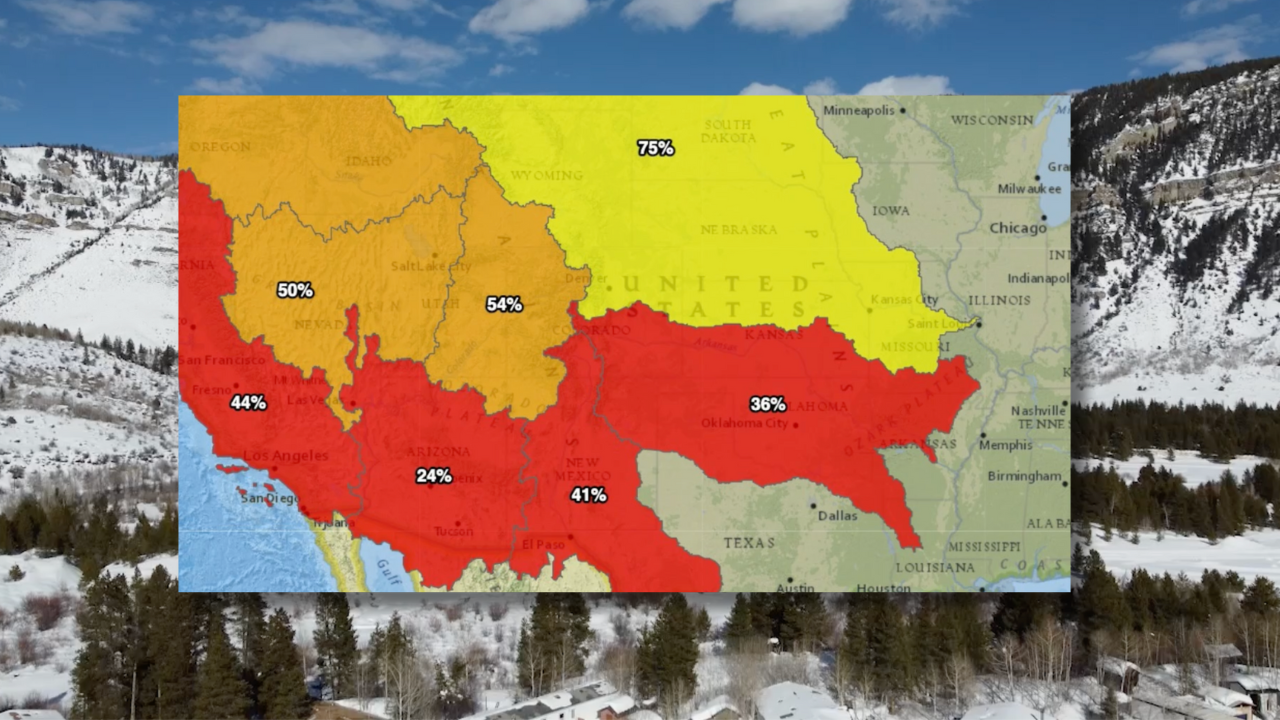


LAS VEGAS (KTNV) — Record-low snowpack across the western United States is raising serious concerns for the Colorado River and the 40 million people who depend on its water, including residents of Southern Nevada.
The Upper Colorado, where Lake Mead's water originates, sits at just 54% of average levels. Southern regions are faring even worse, with the Lower Colorado at only 24% of average snowpack.
WATCH| Geneva Zoltek talks to the Southern Nevada Water Authority over water conservation in the valley
The lack of precipitation coincides with unusually warm weather patterns. Las Vegas experienced its fifth warmest January on record and started February with nine consecutive days of highs in the 70s from Feb. 1 through Feb. 9.
Since Dec. 1, more than 8,000 daily high temperature records have been broken or tied across the West, creating challenging conditions for water storage.
These weather patterns spell bad news for critical reservoirs like Lake Mead, which currently sits at 34% of full capacity. Projections indicate the reservoir could decline even further over the next two years.
The water crisis unfolds against the backdrop of ongoing Colorado River negotiations. The federal government previously set a Feb. 14 deadline for states to reach an agreement on water sharing. The basin states have failed to reach other deadlines in this process.
The challenge ahead involves determining how to share water resources in a future marked by less water availability, drier environments and reduced consistency in precipitation patterns.
However, there is some encouraging news for weather and water observers. A pattern shift expected to begin this week could bring moisture back to the West, potentially boosting snowpack levels in the short term.
This story was reported on-air by a journalist and has been converted to this platform with the assistance of AI. Our editorial team verifies all reporting on all platforms for fairness and accuracy.



