


LAS VEGAS (KTNV) — Unusually hot March temperatures are driving an early spike in heat-related ambulance calls and severe pavement burns, prompting local hospitals to prepare for a record-breaking season.
The region is experiencing its eighth consecutive day of record-high temperatures, breaking the previous record streak of seven days.
WATCH | Record March heat causes early spike in ambulance calls and pavement burns
"Boy, we're watching record highs continue. Today, will be the eighth consecutive record high. We've never had a streak longer than seven days," KTNV Meteorologist Justin Bruce said.
The early heat wave is keeping first responders busy. Community Ambulance saw an uptick in call volume over the weekend, with calls ranging from dehydration to severe heat-related illnesses.
"As expected, anytime the temperatures begin to increase outside, typically our call volume will increase. We did see a little bit of an uptick over the weekend. We saw a little bit of a handful more of calls that get coded as heat," Glen Simpson, vice president of Community Ambulance, said.
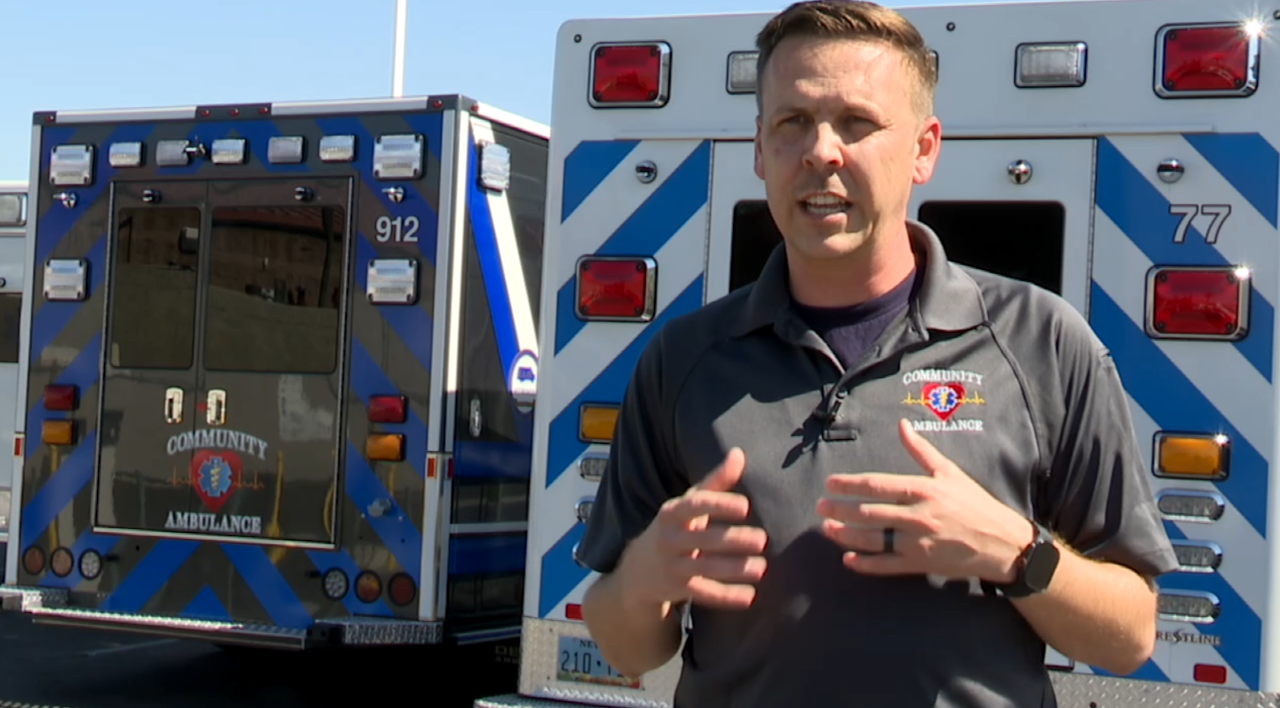
Simpson noted that it takes time for people to adjust to the sudden temperature shift.
"The reality is that our bodies do require that time to acclimate to the weather. Typically, acclimating does take, you know, several days up to a week for our bodies to be adjusting that," Simpson said.
If spending time outdoors, it is important to recognize when symptoms become an emergency.
In general, an ambulance should be called when someone is showing signs of a more serious heat-related illness, particularly heat exhaustion progressing toward heat stroke.
Symptoms to watch for include:
- Altered mental status (confusion, disorientation, fainting, or unresponsiveness)
- High body temperature (typically above 103°F)
- Hot, dry skin or profuse sweating that doesn’t improve
- Rapid pulse or breathing
- Severe headache
- Nausea or vomiting that persists
- Muscle cramps that do not resolve with rest and hydration
If any of these symptoms are present, it’s important to call 911 immediately, as heat stroke is a medical emergency.
For milder symptoms like dizziness, fatigue, or lightheadedness, individuals should move to a cooler environment, hydrate, and rest. However, if symptoms worsen or do not improve within a short period, it’s best to err on the side of caution and call 911.
The impact of the heat extends beyond ambulance calls. University Medical Center is treating more patients for heat-related illnesses and injuries than usual for this time of year, including two people treated for pavement burns.
"This is the earliest that we have seen severe pavement burns like this," Rabia Nizamani, Medical Director for the UMC Lions Burn Care Center, said. "I think the time of year is surprising, but given the weather conditions, it's really not."

When temperatures reach 90 degrees, the pavement can heat up to between 130 and 140 degrees. This can cause serious burns in a matter of seconds.
"They can spend weeks to months in the hospital with us," Nizamani said.
Hospital officials said it could surpass its 2024 burn cases, which were the highest in its history.
"I wouldn't be surprised if we get well over 100 patients this year. We are ramping everything up, whether that is personnel or supplies. We are expecting this to be a very busy season," Nizamani said.
This story was reported on-air by a journalist and has been converted to this platform with the assistance of AI. Our editorial team verifies all reporting on all platforms for fairness and accuracy.
