

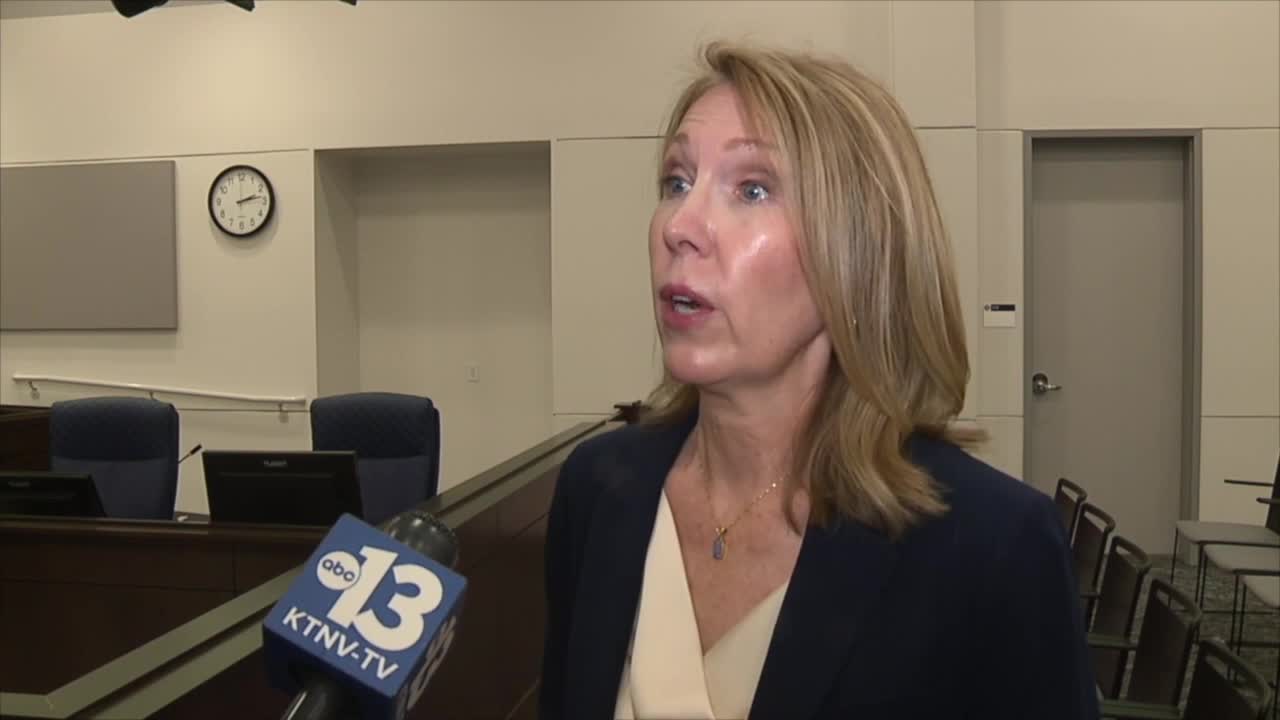


LAS VEGAS (KTNV) — Disagreements between government agencies and advocates for transparency flared during a marathon meeting of the state's public records task force Tuesday.
While members agreed on some issues, they differed on whether government agencies should be allowed to charge for staff time for employees who fulfill public records requests.
Transparency advocates expressed surprise at a draft report that was written by their government counterparts and only delivered to the rest of the committee at 5 p.m. Monday.
The committee, created by Assembly Bill 128 in the 2025 Legislature, is charged with making recommendations to the 2027 Legislature for changes in the state's public records laws.
Based on some of the dialogue Tuesday, it seems clear there will be some disagreement, even in the final report, over some issues.
WATCH | Public records task force argues over access to records
Committee members seemed to agree that an ombudsman — whether a single officer or a council of people — was a good idea to resolve disputes over public records without having to go to court.
"And I'm very encouraged about the discussion with an ombudsperson today," said attorney Colleen McCarty, a former television investigative reporter. "In order to have some place for the general public for requesters to go to get resolution short of the courts should be a priority in my opinion."
Ironically, AB 128 was originally written as a bill to create a public records ombudsman for Nevada, but was amended during the session to create the task force instead.
But members disagreed vehemently on the issue of whether local government agencies could charge public records requesters for the time of employees who research and process public records requests.
The state law in question, NRS 239.052, says a government agency can charge a fee for providing copies of public records, but "such a fee must not exceed the actual cost to the governmental entity to provide the copy of the public record...."
Members disagreed as to whether "the actual cost" includes staff time, or simply materials such as paper or digital media.
Brittany Walker, city attorney of Boulder City, said her city has been the victim of "FOIA bombing," the intentional submission of numerous public records requests designed to overwhelm a government agency.
Walker said she personally has spent hours on some of those requests, taking her away from other duties, and that charging for staff time is a way to recoup some costs.
"There has to be something," Walker said.
Matt Christian, assistant general counsel for the Las Vegas Metropolitan Police Department, said his department gets 20 public records requests per week from a commercial YouTube broadcaster who posts police body camera footage online.
The YouTuber's goal, Christian said, is to identify footage that has already been reviewed by one of the six detectives assigned to public records duty, footage the department then releases for free.
But Christian said the volume of requests could require the department to divert more sworn officers to review footage, which could create other problems.
"The question becomes, how many employees? Where are they going to come from? What other tasks are they being taken away from?" he said. "It's hard to explain to the public that their 911 call is going to take longer because we're answering public records requests."
Leslie Nino Piro, who represents the attorney general's office on the task force, said her research shows that 44 states charge for staff time in fulfilling public records requests, although some states cap the amount of money involved.
Government representatives declined to speak with Channel 13 on camera during a break in the meeting, which started at 9 a.m. and stretched into the late afternoon.
But McCarty said government agencies would incur their staff costs irrespective of public records requests and that charging taxpayers who underwrite government salaries for records is wrong.
"I think those of us on the transparency side believe that government employees collect a salary and this is part of their duties and it shouldn't require an extra expense," she said. "I think we respect each other's viewpoints but we, I think, largely disagree in that area."
The task force will meet at least once more, on Oct. 19, to discuss recommendations and vote on a final report. Lawmakers will take the recommendations under consideration after the session commences in February.
