

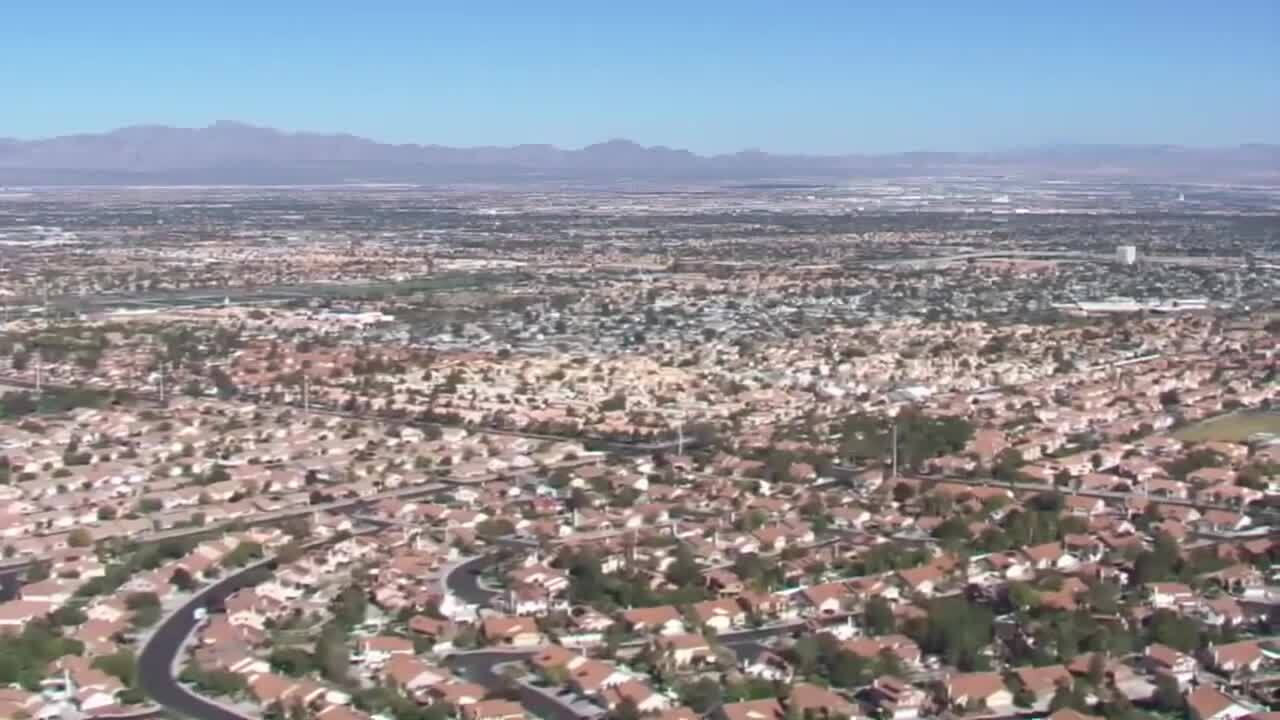


LAS VEGAS (KTNV) — The Southern Nevada Public Lands Management Act was a unicorn when it was passed in 1998.
Unlike public land sales in other states, proceeds from land sales in Southern Nevada would remain in the Silver State, used to buy environmentally sensitive land, build parks, trails and natural areas in Clark County, and make capital improvements at national recreation and conservation areas, including Lake Mead and Red Rock Canyon.
WATCH| Steve Sebelius talks to a former BLM official about land sales in Southern Nevada three decades after the Southern Nevada Public Lands Management Act was passed
The justification? The vast majority of land in Nevada is owned or controlled by the federal government, and Nevada deserved some benefit from the sale of lands here.
But now, three decades on, is the law still working?
One former Bureau of Land Management official, Mike Ford, who was there when the Public Lands Management Act was drafted and passed, said at the time the expectation was that all 67,921 acres available for sale would have been long gone by now.
"And I think the authors at the time, if you were to talk to [former U.S. Sen.] Richard Bryan or [former Rep.] John Ensign, or those of us that were involved — and I was with BLM back then — we envisioned that the land disposal in the valley would occur, you know, maybe a five to 10 year period," says Ford, now a land consultant.
"That real premise was for the Bureau of Land Management to get out of the urban land management business and use the proceeds from the sale to do other good things on the wildlands of the other 48 million acres they [the BLM] manage in the state of Nevada," Ford added. "That obviously didn't happen, and now we're 28 years in, and roughly half of that 67,000 acres is still there."
Ford admits that the Great Recession that started in 2008 killed any drive to buy or develop land. And the COVID-19 pandemic of 2020 temporarily brought the industry to a halt, too.
But still, he says, the pace of land sales — and the amount of acreage that comes up for sale — could be higher.
Under the law, land must be "nominated" by a local government for sale, and the BLM then packages those requests, either to be conveyed to a local government or put up for private auction.
According to Jon Raby, state director for the BLM in Nevada, officials here move rapidly when they receive those nomination requests. He said they can complete their work in less than a year.
But he acknowledged that some parts of the process — appraisals, for example, to determine fair market value, or getting final approval from BLM headquarters — can add time to the process.
Raby says the BLM has a good working partnership with Gov. Joe Lombardo, who has called on the federal government to make more land available for affordable housing. And his office works well with Clark County and all the cities in the valley.
(To be sure, he said there are land sales pending now in Las Vegas and North Las Vegas of 900 acres and 500 acres, respectively, as well as 19 acres in Henderson set aside for affordable housing.)
"In the BLM, we're all in on making land available for housing in Southern Nevada and across Nevada," Raby said. "I mean, that's one of the things we do. We do it very well, and we're going to continue to make sure that we're front and center on meeting that demand and finding ways that we can have our hands untied as well, to eliminate unnecessary process steps, the bureaucracy that we have to go through on the different steps in the process."
What everyone agrees upon is that certain public lands in Southern Nevada — some purchased or expanded with funds from the Land Management Act — will never be developed.
That includes the Sloan Canyon, Tule Springs, Gold Butte, Avi Kwa Ame and Red Rock Canyon national conservation areas, as well as the Spring Mountains and Lake Mead national recreation areas and the Desert National Wildlife Refuge.
In fact, the amount of publicly owned acreage in the state has actually increased under the lands management law, as private parcels are added to government holdings as lands protected from development.
Ford suggests the process could be sped up by an amendment to the law that turns over all remaining public land — there are about 27,000 acres left — to local governments in Southern Nevada, which would direct development of the properties. The profits from any land sold would still go to the special fund established under the law, to be used for its authorized purposes.
Raby says he thinks that federal requirements for land development — including appraisals — would still be required; he hasn't seen those waived in other lands legislation, he said.
"So those are just some things to think about now, whether or not the proposal to do that transfer has merit," he said. "I think we'll continue to work and support the local communities."

