

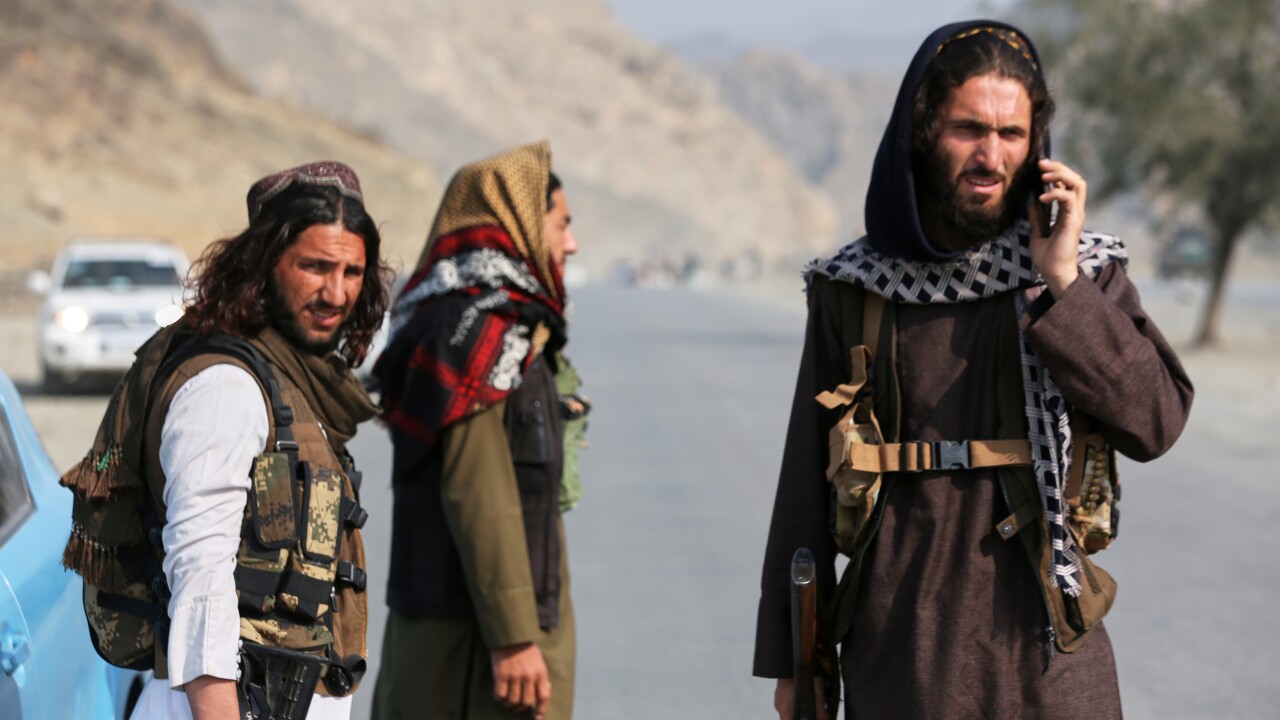


Pakistan and Afghanistan traded attacks in a dramatic escalation of tensions between the countries that Pakistan’s defense minister said Friday means they are now in “open war.”
Tensions have been high between the neighbors for months, with border clashes in October killing dozens of soldiers, civilians and suspected militants. Pakistan accuses Afghanistan’s Taliban government of harboring militant groups that then stage attacks across the border and also of allying with its archrival India.
A Qatari-mediated ceasefire ended the fighting, although the two sides still occasionally trade fire. Several rounds of peace talks in Istanbul in November failed to produce a formal agreement.
Late Thursday, Afghanistan launched a cross-border attack on Pakistan, saying it was in retaliation for deadly Pakistani airstrikes on Afghan border areas Sunday.
RELATED STORY | Pakistan and Afghanistan announce ceasefire after deadliest clashes in years
Pakistan then carried out airstrikes in Kabul and two other Afghan provinces early Friday.
After the strikes Friday, Defense Minister Khawaja Mohammad Asif said in an X post that Pakistan had hoped for peace in Afghanistan after the withdrawal of NATO forces in 2021 and expected the Taliban, which seized power in the country, to focus on the welfare of the Afghan people and regional stability.
Instead, he said that the Taliban had turned Afghanistan “into a colony of India,” with which Pakistan has periodically engaged in wars, clashes and skirmishes since gaining independence from British colonial rule in 1947. India has had improved ties with Afghanistan recently, offering to enhance bilateral trade, to the annoyance of Islamabad.
“Our patience has now run out. Now it is open war between us,” he said. There was no immediate reaction from Afghan officials.
Afghan authorities in the eastern Nangarhar province said that fighting was ongoing in the Torkham border area Friday morning. The province's information directorate said that Pakistani mortar fire hit civilian areas in Torkham, including a refugee camp, which had been evacuated overnight. In response, Afghanistan was targeting Pakistani army posts across the border, it said.
‘Exporting terrorism’
Asif, the Pakistani defense minister, accused Afghanistan of “exporting terrorism.” Islamabad frequently levies the allegation at its western neighbor as militant violence has surged in Pakistan, accusing Afghanistan of supporting the Pakistani Taliban, or TTP, and outlawed Baloch separatist groups.
Pakistan accuses the TTP — which is separate from but closely allied with Afghanistan’s Taliban — of operating from inside Afghanistan. Both the group and Kabul deny that charge.
RELATED STORY | Afghanistan, Iran among nations facing new Trump immigration pause
Pakistan has also frequently accused neighboring India of backing the outlawed Baloch Liberation Army and the Pakistani Taliban, allegations New Delhi denies.
Asif's comments came hours after Pakistan carried out airstrikes in Afghanistan’s capital, Kabul, as well as in Kandahar in the south and Paktia province in the southeast, according to Pakistani officials and Afghanistan government spokesperson Zabihullah Mujahid. Pakistan said the strikes were in retaliation for the Afghan cross-border attacks.
Retaliatory strikes
Afghanistan, meanwhile, said that it launched its attack late Thursday also in retaliation — for deadly Pakistani airstrikes on Afghan border areas Sunday.
The governments have issued sharply differing casualty claims. Each said that it inflicted heavy losses of dozens of soldiers on the other, while putting its own casualty figures in the single digits. The claims couldn't be independently verified.
Afghanistan also claimed it had captured an undisclosed number of Pakistani soldiers. Mosharraf Ali Zaidi, a spokesperson for Pakistani Prime Minister Shehbaz Sharif, denied any soldiers had been captured.
Information Minister Attaullah Tarar said Pakistan’s anti-drone systems shot down several small drones over the northwestern cities of Abbottabad, Swabi, and Nowshera on Friday. He said the drones appeared to be part of a failed attack by the Pakistani Taliban, and that there were no casualties. Tarar claimed the drone attacks “once again exposed direct linkages between the Afghan Taliban regime and terrorism in Pakistan.”
International calls for restraint
Turkish Foreign Minister Hakan Fidan held separate phone calls with his Pakistani, Afghan, Qatari and Saudi counterparts on Friday to discuss the conflict, a Turkish official said, without providing details on the talks. The official spoke on condition of anonymity in line with government policy.
In October, Turkey, Qatar and Saudi Arabia had facilitated talks between the sides.
U.N. Secretary-General António Guterres urged both sides to protect civilians as required under international law and “to continue to seek to resolve any differences through diplomacy,” U.N. spokesperson Stephane Dujarric said in a statement.
Russia called for an immediate halt to the fighting and for a diplomatic resolution to the conflict, Russian diplomat Zamir Kabulov told news agency Ria Novosti. Kabulov, who is President Vladimir Putin’s special envoy for Afghanistan, said that Moscow would consider mediating between the two countries if asked, according to Ria Novosti.
Iranian Foreign Minister Abbas Araghchi urged Pakistan and Afghanistan to resolve their differences through dialogue during the holy month of Ramadan. He also said that Tehran was ready to assist in facilitating dialogue.
Refugees at the border
Pakistani authorities said that dozens of Afghan refugees in the Torkham border area had been relocated to safer places.
Pakistan launched a sweeping crackdown in October 2023 to expel migrants without documents, urging those in the country to leave of their own accord to avoid arrest and forcibly expelling others. Iran also began a crackdown on migrants at around the same time.
Since then, millions have crossed the border into Afghanistan, including people who were born in Pakistan decades ago and had built lives and created businesses there.
Last year alone, 2.9 million people returned to Afghanistan, the U.N. refugee agency has said, with nearly 80,000 having returned so far this year.
