

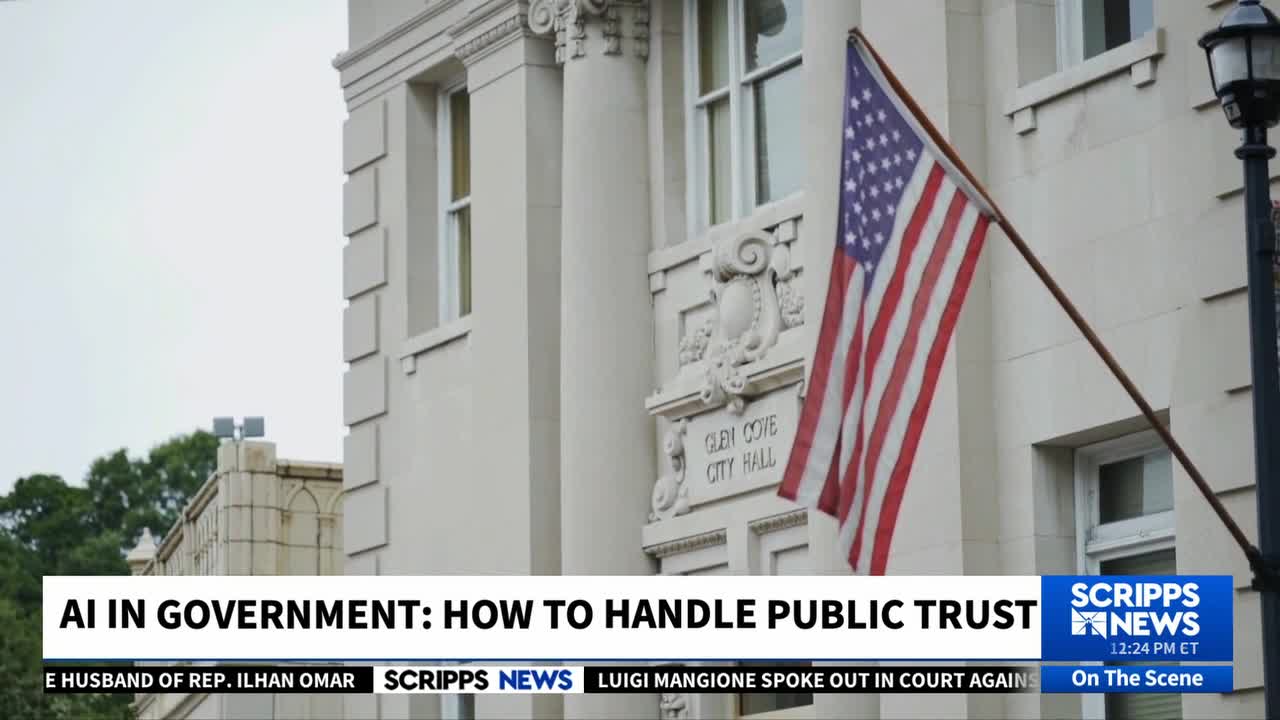


Artificial intelligence is quickly making its way into city halls across the country, helping local governments sort service requests, manage information and communicate with residents.
"There was general enthusiasm at first, particularly from elected officials, to try to integrate these tools quickly, to get more organizational efficiency out of them, and to try and scale," said Chris Jordan, program manager for AI and innovation at the National League of Cities.
Jordan helps city leaders navigate AI development through his work at the National League of Cities, which has found that AI tools can be most effective in enhancing city services, supporting employee tasks and helping cities make sense of their data.
With 96% of mayors expressing interest in using generative AI, Jordan said building public trust often comes down to establishing clear, uniform standards, including AI-specific privacy policies and labeling when AI is used in public-facing content.
"Public listening sessions or task forces can also be appropriate for cities to use if there's a general sentiment of anxiety or distrust about certain technologies," he said.
IN CASE YOU MISSED IT | Teaching skills and safety on the cutting edge of artificial intelligence
Some cities are going further when it comes to transparency. Lebanon, New Hampshire, posts a public list of every AI tool it uses, while San Jose conducts an annual review examining how its algorithms affect residents.
"For the most part, constituents want faster and more effective city services that make them feel good about how their tax dollars are being spent," said Joe Scheidler, who is building Helios, an AI tool designed for policy work.
A major hurdle, however, is both the perception and reality that AI systems can make mistakes.
"Workforces do not trust generative AI outputs in many contexts and sensitive use cases. And so we've been really laser focused from a product mission perspective on solving the issue of hallucination, AI drift and baking verification, traceability and provenance into the user experience," Scheidler said.
Despite those concerns, successful use cases are already emerging. Dearborn, Michigan, uses a translation bot to better serve non-English-speaking residents. Washington has tested an AI tool to make its open-data portals easier to search. And Tucson’s water department in Arizona uses AI to identify which pipes are most likely to fail before problems occur.
For residents curious about how their city is using artificial intelligence, experts recommend asking questions, attending public meetings and paying close attention to how those tools are explained.
