

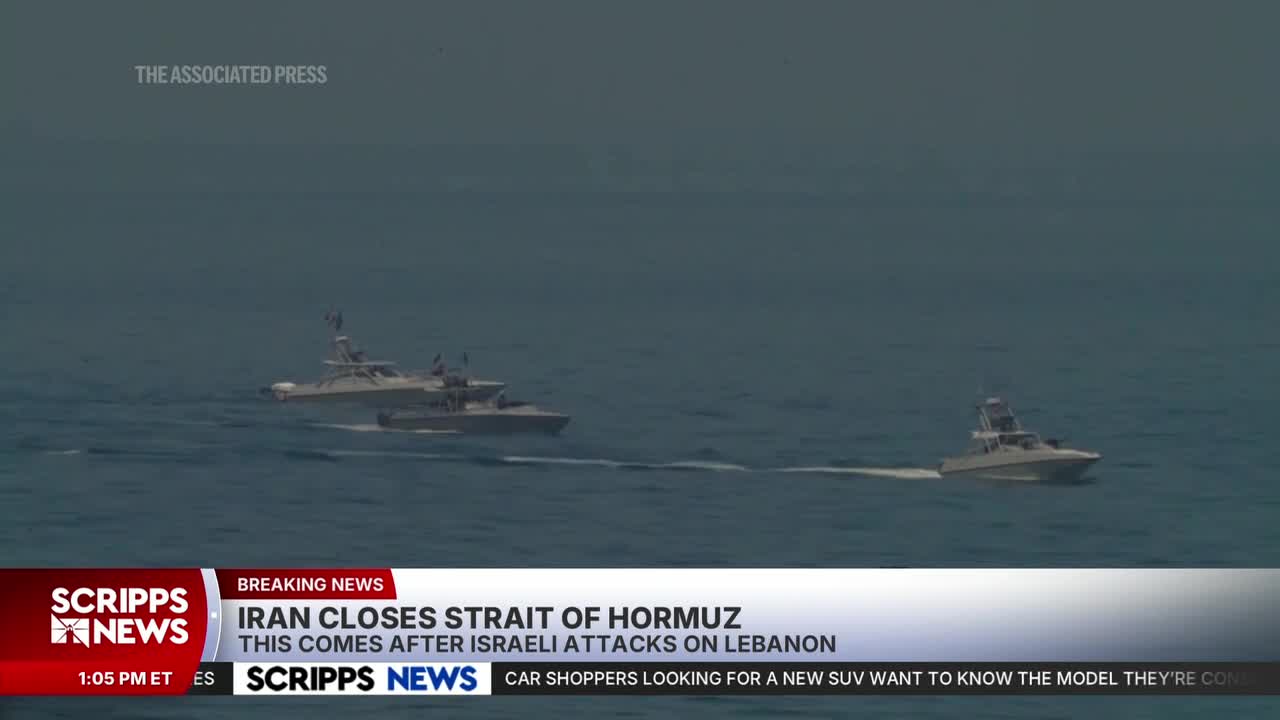


Iran’s state-run Fars News Agency reported Wednesday that the country is closing the Strait of Hormuz, less than a day after President Donald Trump announced a ceasefire agreement with Iran.
Fars said tanker traffic would come to a “complete stop,” citing what it described as Israeli violations of the ceasefire, including attacks in Lebanon. Israel has said it will continue operations in Lebanon, arguing it was not part of the agreement, a claim disputed by Iran.
The report said two ships were allowed to pass through the strait before Iran reversed course.
In response to the report, White House press secretary Karoline Leavitt said, "The immediate reopening of the strait without any limitations, whether it is in the form of or otherwise."
While U.S. officials have largely described the military offensive against Iran as a success, Iran’s control over the Strait of Hormuz has become a point of frustration for the Trump administration. The country’s ability to keep oil tankers from passing through the strait pushed global oil prices higher. Gas and diesel prices in the United States and abroad rose in response.
About one-fifth of the world’s oil production passes through the Strait of Hormuz.
RELATED STORY | Trump addresses reporters after ominous threat to strike Iran's infrastructure
Questions remain about the future of the strait and the broader conflict as bombings have continued across the region.
Before the latest closure of the strait, officials told The Associated Press that Iran and Oman plan to charge a toll for tankers passing through the waterway. Previously, it was considered international and not subject to tolls.
RELATED STORY | Gas prices near $4 a gallon as the ongoing war in Iran limits oil movement in the Strait of Hormuz
If the cease-fire holds, there are questions about how much stronger Iran could become as it collects tolls.
The U.S. has said the agreement means Iran will not be able to enrich uranium for a nuclear weapon. But allies in the region remain concerned about Iran’s conventional weapons and drone capabilities.
“We hope Iran chooses a lasting peace, but as Secretary Hegseth said, let us be clear: a cease-fire is a pause, and the joint force remains ready, if ordered, to resume combat operations with the same speed and precision we’ve demonstrated over the last 38 days. We hope that is not the case,” Gen. Dan Caine, chairman of the Joint Chiefs of Staff, said on Wednesday.
