

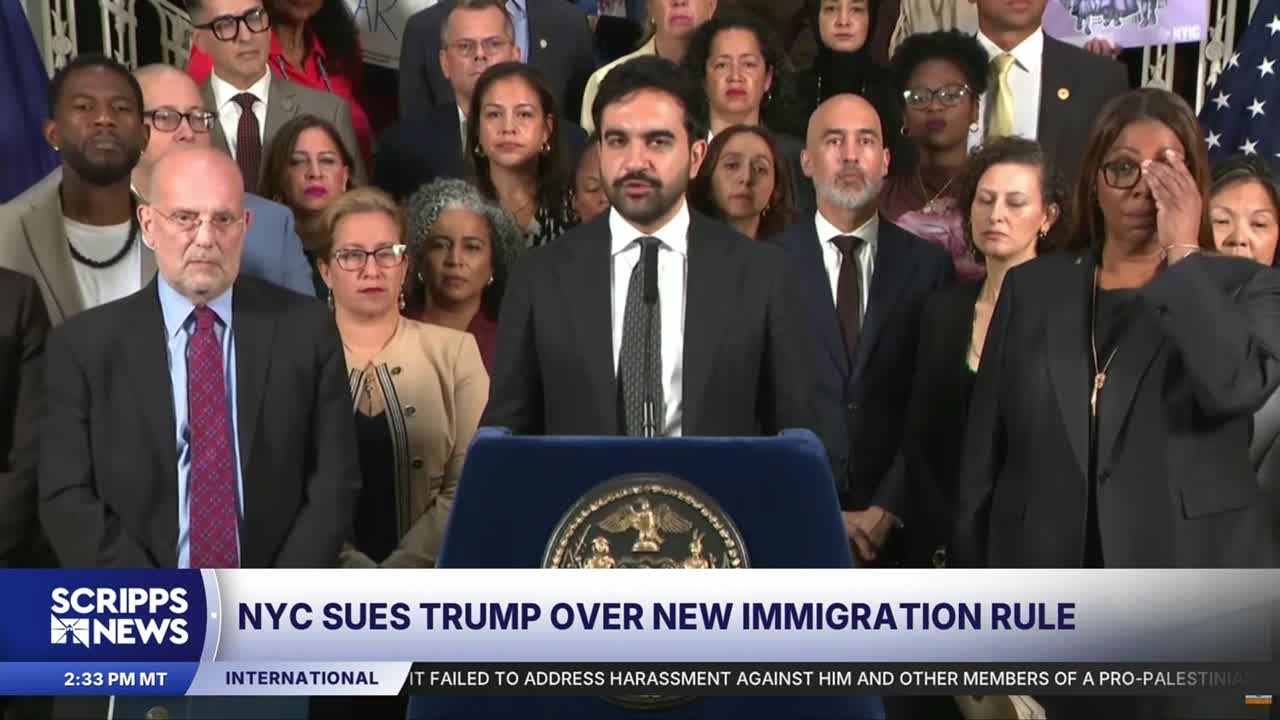


New York City is suing the Trump administration over changes to a federal immigration test that city officials say could discourage legal immigrants from accessing basic public benefits.
Mayor Zohran Mamdani announced Monday that the city filed a lawsuit challenging revisions to the “public charge” rule, which immigration officials use when deciding whether to grant green cards or visas.
The public charge provision, part of federal immigration law since 1882, allows officials to consider whether an immigrant is likely to become primarily dependent on the government for subsistence. Under previous guidance, immigration officers weighed limited public benefits, including Medicaid and the Supplemental Nutrition Assistance Program, known as SNAP.
The administration’s new policy expands that review by applying a broader, case-by-case basis that Mamdani called “simply a vehicle for confusion and a vehicle for cruelty.”
Immigration officials can now consider a wider range of public benefits, along with factors including income, assets, education, job skills, employability, health, health insurance coverage and age.
The updated guidance also places less emphasis on affidavits of support from sponsors, though they still remain part of the review process.
RELATED STORY | Debt collectors are helping DHS fine immigrants while charging big fees
City officials and immigration advocates argue the changes could make it easier to deny legal residency to immigrants who rely on government assistance programs or fear that using those programs could jeopardize their immigration status.
“Make no mistake. This is an undisguised effort to strip New Yorkers of the services they rely on, the public benefits they are entitled to,” Mamdani said Monday. “Families, including those with children who are U.S. citizens, have already begun to forego essential services like SNAP, Medicaid and affordable housing out of the fear that if they use these programs, immigration officers could use it as justification to deny them a future in our country.”
Mamdani said the policy change would ultimately increase hardship for immigrant families and create broader costs for communities.
“Denying people services does not erase their need — it compounds it, generating a greater cost to our system that will be placed on the backs of working people for years to come,” he said. “Nothing about this rule will reduce waste or keep Americans safer or improve New Yorkers’ lives. It is simply a vehicle for confusion and a vehicle for cruelty.”
Chicago, San Francisco and Seattle joined New York City in the lawsuit. New York Attorney General Letitia James also announced a separate legal challenge filed by 21 states and the District of Columbia.
James said the policy changes could force immigrant families to make difficult decisions about whether to seek help.
“That means immigrant New Yorkers may be forced to ask themselves impossible questions,” James said. “Will getting health insurance hurt my chances of getting a green card? Will accepting food assistance when I fall on hard times be held against me?”
Immigration advocates said the changes could create fear among families already navigating the legal immigration process.
“Imagine having to choose to feed your children or being able to adjust your immigration status,” said Murad Awawdeh, executive director of the New York Immigration Coalition. “No New Yorker should ever have to worry that accessing essential health care, nutrition assistance, or other life-saving programs could put them on a path to detention and deportation.”
MORE ON IMMIGRATION | Undocumented immigrant who moved last year was hit with a $1.8 million DHS fine
The public charge rule rarely results in deportation, but immigration advocates say it can create uncertainty around a person’s legal status and discourage immigrants from using services intended to help families meet basic needs.
The revised rule is scheduled to take effect Friday, raising concerns among officials and advocacy groups that more legal immigrants will avoid programs such as Medicaid, public housing assistance and SNAP out of fear it could jeopardize their immigration status.
