

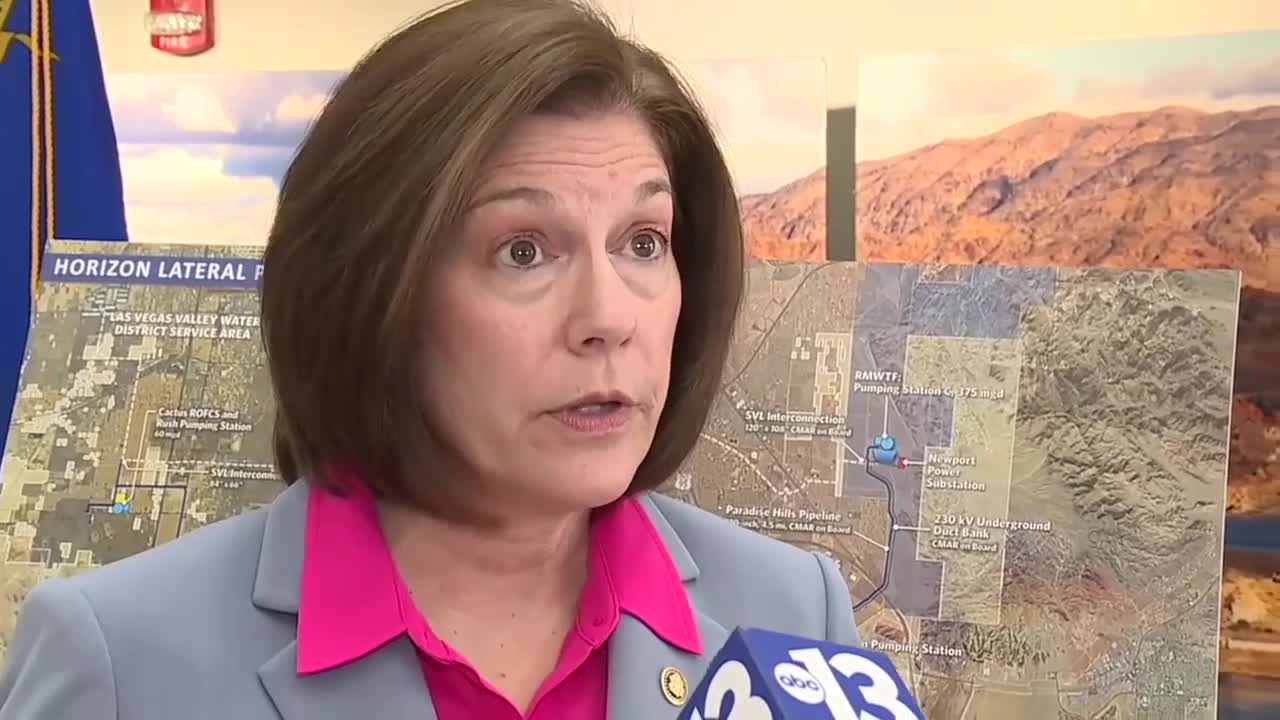


LAS VEGAS (KTNV) — Nevada's two Democratic senators came out on opposite sides of a major bill that would streamline environmental rules for projects built on federal lands.
Sens. Catherine Cortez Masto and Jacky Rosen differed on the Bipartisan American Affordability and Jobs Act of 2026, which passed the Senate 62-33 last week.
The bill now heads to the House of Representatives for consideration.
WATCH: Bipartisan permitting reform bill passes Senate
In a statement, Cortez Masto said she cast a no vote on the bill because "...it contains harmful changes to the National Historic Preservation Act that undermine Tribal sovereignty and fail to protect government-to-government Tribal consultation."
"This county needs permitting reform. I support efforts to lower energy costs and have championed proposals to make it easier to build clean energy projects, upgrade our electrical grid, and grow our critical mineral supply chain in the U.S.," Cortez Masto's statement reads. "But there is no reason to threaten Tribal sovereignty to accomplish these goals."
But Rosen said the bill would be good for Nevada's clean energy projects and bring jobs to the Silver State.
"As the state with the most solar jobs per capita and tremendous geothermal potential, Nevada stands to greatly benefit from historic federal investments in renewable energy projects that create good-paying jobs and lower energy costs, all while reducing carbon emissions. Unfortunately, current government red tape has made it nearly impossible to bring these clean energy projects online, which is why sensible reform like this bipartisan bill is needed," Rosen said. "While we fought to strengthen this bill, Senate Republicans refused to accept any changes and I believed we couldn't squander this opportunity to lower energy costs for hardworking Nevada families."
Rosen said she tried to remove sections reforming the National Historic Preservation Act, but was unsuccessful.
Of the 62 yes votes, 14 were Democrats. Just two Republicans joined the 33 senators voting no.
Patrick Donnelly, Great Basin director for the Center for Biological Diversity, said the bill would erode rules that govern not just clean energy projects, but also mines, fossil fuel plants and even data centers.
"Permits are where our environmental protection laws come to bear," he said. "If you want to get clean air and clean water, you've got to make sure a project goes through permitting in such a way that it's not going to harm the environment. And so, permitting is seen as this bad word, but it's actually essential for us to have a livable planet."
Although most of the focus has been on clean energy — think solar, wind or geothermal projects — Donnelly said the reform bill will apply far more broadly.
"Everything the federal government permits, whether it's mining, whether it's data centers on public land, whether it's military operations and nuclear waste disposal, all of that is governed by these environmental laws, and these protections are being stripped away across the board," he said. "And so we're going to see more development on public lands, more data centers on public lands, more polluting industry, and the protections that are built in to protect our clear air and water and our wildlife are being stripped away by this bill."
In the House, lawmakers could pass the Senate version as is or could add amendments to the bill, in which case it would have to go back to the Senate for concurrence before moving on to President Donald Trump, who supports the measure.
Donnelly said there's still a chance the House may kill it, although it would require both Republicans and Democrats to vote no.
Reps. Susie Lee and Steven Horsford were not available on Monday. Rep. Dina Titus said she's still considering the measure before taking a position on it.
