



LAS VEGAS (KTNV) — With tax season underway, scammers are stepping up their efforts to target people filing their returns and some of the calls are becoming harder to detect.
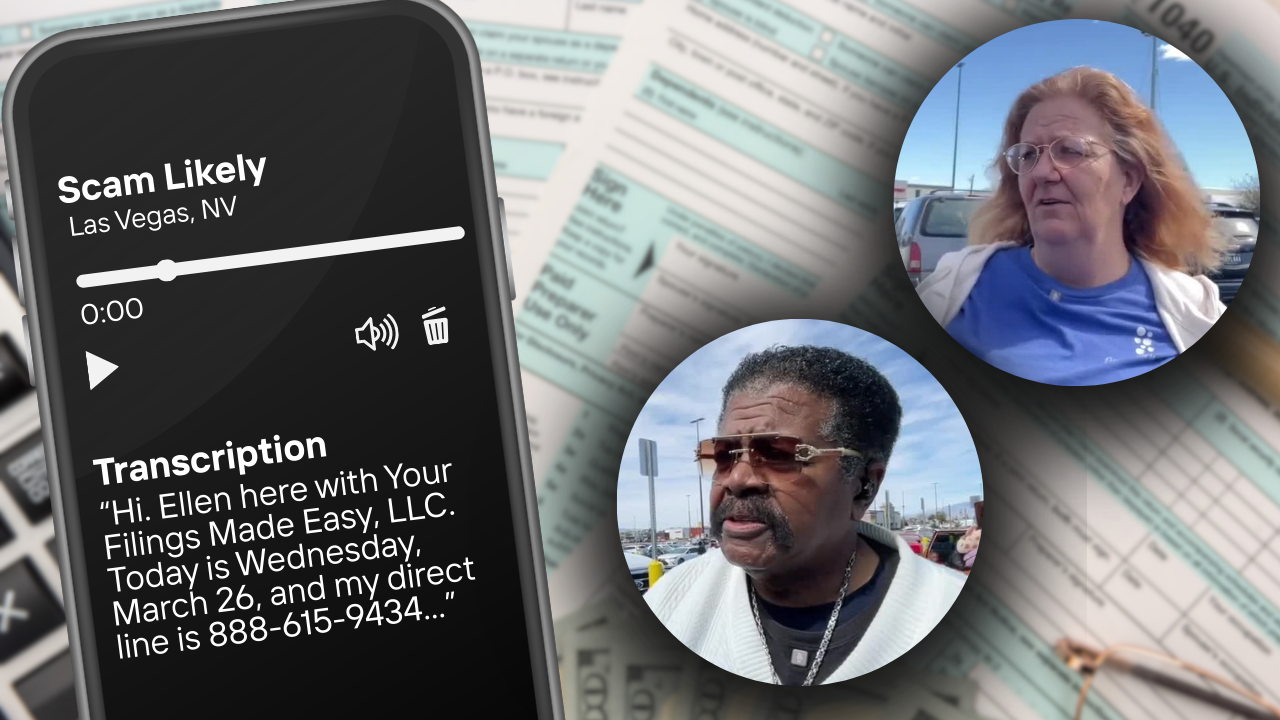
WATCH: Consumer Reporter Shakeria Hawkins recently played a real tax scam call for Las Vegas shoppers to see whether they could tell it was a fraud.
The recorded call mimicked the type of message scammers are sending across the country to pressure people into sending money.
After hearing the call, Las Vegas resident Christina Wallace said she immediately recognized the warning signs.
“That message is not even convincing,” she said.
Wallace says she learned to be cautious after falling victim to a scam during the pandemic. Since then, she has avoided handling any financial matters over the phone.
“I would never ever do anything over the phone,” she said.
However, not everyone reacts the same way.
Seventy-five-year-old Perry Winchester said the call sounded believable to him because of how professional the voice sounded.
“To me, it was convincing as far as how professional her voice was,” Winchester said.
Fraud prevention expert Clayton LiaBraaten says that reaction is exactly what scammers are hoping for.
According to LiaBraaten, criminals are increasingly using artificial intelligence voice technology, caller ID spoofing, and sophisticated social engineering tactics to make their calls appear legitimate, especially during tax season when people expect communication about their finances.
“A red flag could be someone saying you owe money and need to send it immediately through a bank transfer or face penalties… or even claiming they owe you money,” LiaBraaten said.
Experts say the safest approach is to treat any unexpected call about taxes or payments with caution. Never provide personal information or send money based on a phone call alone.
For Wallace, the growing number of scams is frustrating, especially when hardworking people are targeted.
“What is the world coming to for individuals scamming people that work hard for our money,” she said. Officials also remind taxpayers that the Internal Revenue Service does not call, text, or email demanding immediate payment.
If you receive a suspicious call, hang up and verify the information directly through official government websites or trusted sources.
If there's an issue impacting your wallet that you want Shakeria to look into, send her an email at Shakeria.Hawkins@KTNV.com, or click the banner below:

