

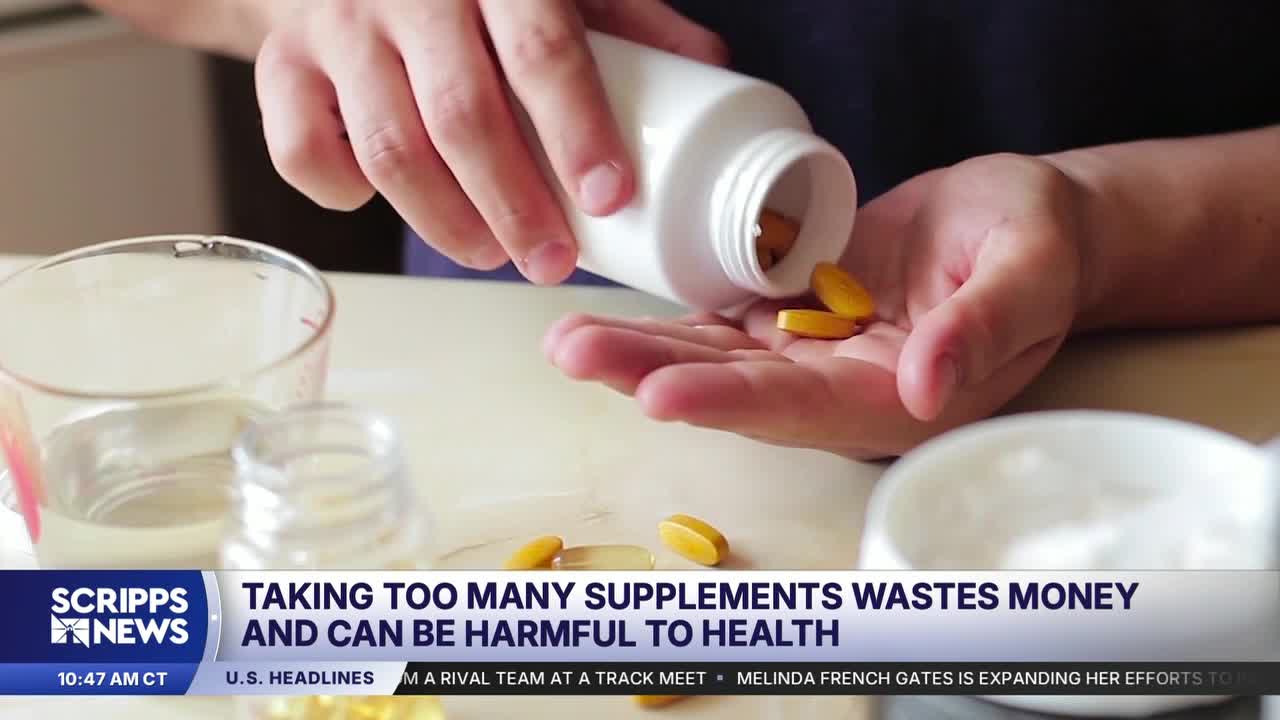


The U.S. dietary supplement market is booming and is expected to surpass $70 billion this year. The industry now includes more than 100,000 unique products promising weight loss, better sleep, stress relief, pain relief, and more.
Social media is fueling that demand, with protein powders, collagen, and L-theanine now being offered in drinks, snacks, and trending online. But health experts warn that taking too many supplements can be a waste of money — and some can harm your liver or kidneys, interfere with medications, or deliver doses well beyond safe limits.
RELATED STORY | Some protein powders and shakes contain high levels of lead, new report finds
Jensen Jose, senior regulatory counsel at the Center for Science in the Public Interest, said the industry lacks meaningful oversight.
"There's this just unaccountability that dietary supplement manufacturers and marketers have, and just like every point of the industry, they're just not really held accountable," Jose said.
The FDA does not approve supplements for safety or efficacy before they hit store shelves. That means the burden falls on consumers and their doctors to decide what is safe.
FROM THE ARCHIVES | How are dietary supplements regulated?
Jose said shoppers should watch for warning signs when evaluating products.
"The biggest red flag is are they making a claim that sounds too good to be true," Jose said.
If you take supplements, experts say you should inform your doctor about every product, choose brands that are third-party tested, and watch for any changes in your body — good or bad. The safest way to avoid unintended consequences is to first consult a health professional.
